
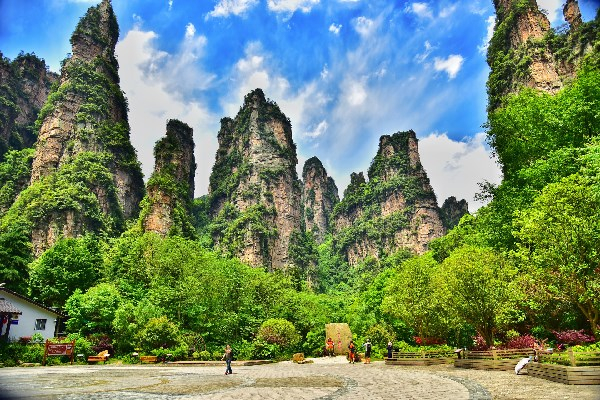
Zhangjiajie is located in the heart of the Wuling Mountains in northwestern Hunan Province. Originally named Dayong, it was renamed Zhangjiajie in 1994. Its core scenic area, Wulingyuan, comprises Zhangjiajie National Forest Park, Suoxiyu, and Tianzi Mountain. In 1992, Wulingyuan was inscribed on UNESCO’s World Natural Heritage List. The area features over 3,000 quartz-sandstone peaks and forests that rise from the ground like bamboo shoots. In 2010, this unique landform was officially designated “Zhangjiajie Landform” by the International Association of Geomorphologists. Hailed as “an enlarged bonsai and a miniature fairyland,” the Yuanjiajie Scenic Area’s Qiankun Pillar served as the inspiration for the floating mountains in the film Avatar. Tianmen Mountain is renowned for Tianmen Cave, the world’s highest natural mountain-penetrating karst cave, as well as its glass skywalk. In 2024, Zhangjiajie welcomed more than 1.83 million international visitors from 183 countries and regions, making it one of the most popular mountain destinations for inbound tourism.
Zhangjiajie
- Intro
- Popular
- Trips
Popular Attractions
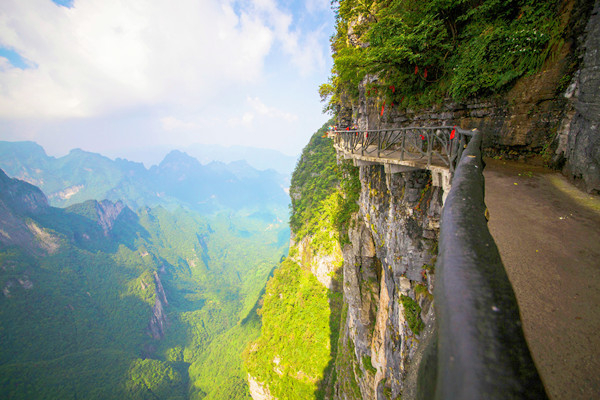
tianmenshan National Forest Park
Tianmen Mountain National Forest Park, a national 5A-level tourist area, is located 8 kilometers in the southern suburbs of the Urban area of Zhangjiajie City. It is a mountainous natural scenic spot. The park has a total area of 96 square kilometers, with a mountain top area of 2 square kilometers. Its main peak is 1,518.6 meters above sea level, which is a typical karst landform. It is the highest mountain in Yongding District of Zhangjiajie, only 8 kilometers away from the Urban area. It is named after the natural wonder Tianmendong Gate. Tianmen Mountain was known as Songliang Mountain in ancient times, also known as Yunmeng Mountain and Fanghu Mountain. It was the earliest famous mountain in Zhangjiajie to be recorded in history. It was approved as a national forest park in July 1992.
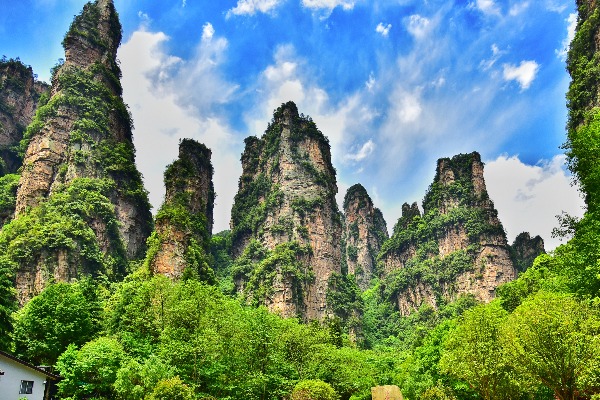
Zhangjiajie National Forest Park
Zhangjiajie National Forest Park is located in Zhangjiajie City in the northwest of Hunan Province. The natural scenery of Zhangjiajie National Forest Park is amazing by the peaks, the valleys, and the forests. There are more than 3000 strange peaks in it, which are like people, beasts, objects and objects, with realistic images and spectacular momentum. In the canyons between the peaks, the streams are gurgling and the shade covers the sun. It is known as "Three Thousand Strange Peaks and Eight Hundred Beautiful Waters". On September 25, 1982, with the approval of the State Council of the People's Republic of China, the original Zhangjiajie Forest Farm was officially named "Zhangjiajie National Forest Park." It is also the first national forest park in China. In December 1992, the unique quartz sandstone peak forest was included in the World Natural Heritage List by the United Nations, and in February 2004, it was included in the World Geopark.
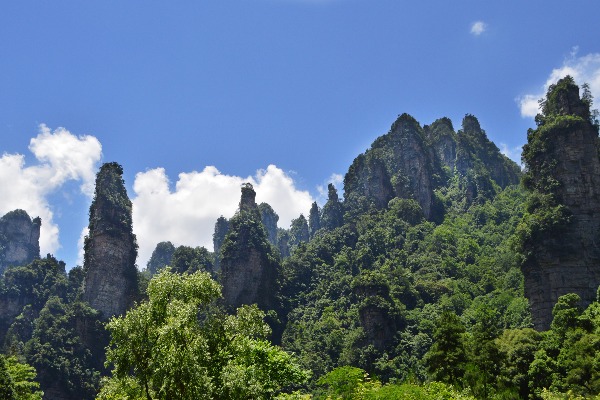
Shili gallery
Zhangjiajie Shili Gallery Scenic Area is located in Suoxiyu Scenic Area and is the essence of tourism in the scenic area. On both sides of this ten-mile-long valley, there are rich natural landscapes, and walking through it seems like you are in a painting. Dai Feng stands next to the ditch. The rocks on the mountain form more than 200 stone scenery shapes that resemble people, objects, birds and beasts. Among them, peacocks opening their screens, medicine pickers, longevity stars welcoming guests, and tigers howling in the sky are the most famous.
Recommend Trips
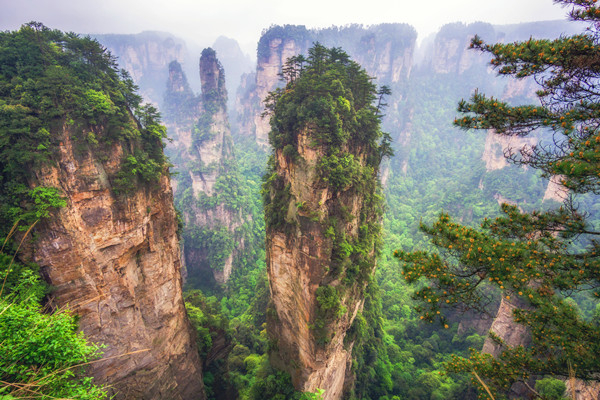
10-Day China Entry Tour: Guangzhou, Shenzhen, and Zhangjiajie Highlights: Canton Tower, Chen Clan Ancestral Hall, Pearl River Night Cruise, high-speed rail experience, Sea World, sightseeing at Ping An Finance Center, drone food-delivery demonstration, visit to a robot 6S dealership, Zhangjiajie National Forest Park, Zhangjiajie Grand Canyon, Tianmen Mountain National Park, and DIY Guangcai (Guangzhou enamel) painting.
10 days
Stroll through the iconic landmarks of Guangzhou and Shenzhen, explore the frontiers of technology, and experience intangible cultural heritage alongside drone-delivered meals.
Take in the breathtaking peaks of Zhangjiajie, dare to cross the Glass Bridge and ride the Bailong Elevator, and immerse yourself in the awe-inspiring power of nature.
Blend the vibrancy of urban life with the serene beauty of mountains and waters, and explore classic cultural landmarks of Guangdong and Hunan in one seamless journey.
"Late to Meet Xiang, Ink-Wash Wuling 5-Day Tour: Zhangjiajie National Forest Park + Tianmen Mountain + Fenghuang Ancient Town + Charming Xiangxi + Tuojiang River Boat Ride"
5 days
In Zhangjiajie Grand Canyon, cascading waterfalls and mystical springs are everywhere; a thin mist hovers over the streams, creating an atmosphere akin to stepping into a utopian paradise.
Discover the enchanting Yuanjiajie, step into the mysterious world of Pandora, and immerse yourself in the fantastical realm of Avatar!
Forest Park's Second Mountain Entry - Panoramic Full Tour, Enjoy It All in One Go
"Zhangjiajie 6-Day Inbound Tour: National Forest Park + Tianmen Mountain + Grand Canyon Glass Bridge + Charming Xiangxi + Fenghuang Ancient Town"
6 days
Zhangjiajie National Forest Park: Two-Day All-Inclusive Tour – Experience It All in One Go
Visit the filming location of the floating “Hallelujah Mountains” from the movie *Avatar*—the Qiankun Pillar; and experience the Bailong Elevator, billed as the world’s tallest outdoor elevator.
Watch the stunning "Charming Xiangxi" performance, take a night tour of the 72 Qilou buildings, and savor the Tujia culture of western Hunan.
No Suitable Tour?
Start planning your tailor-made tour with 1-1 help from our travel advisors.

