• loading.......

[Travel with World Heritage to China·Beijing Xi'an, Chengdu, Chongqing 10th] Forbidden City + Great Wall + Temple of Heaven + tricycle tour Hutong + Qin Shi Huang Terracotta Warriors + Pottery Maid DIY+ Ming City Wall + Tang Dynasty Sleepless City + Panda Base + Sichuan Opera Face Changing + Dazu Stone Carvings + Hongya Cave + Two Rivers Night Tour

Destination Place

Beijing

Travel Days

10 days

Highlights

  • Covering the five world-class heritage sites and watching cute pet national treasures, the gold content is full of

  • Rickshaws stroll around alleys, DIY pottery figurines, Sichuan opera face changing... Dual experience of cultural heritage in the market

  • From the Forbidden City to the mountain city, all the essential attractions are covered, and you can understand three thousand years of China in ten days

Itinerary

Day1
Beijing
Beijing·First sight of the capital
Today, I flew to Beijing by myself. Upon arrival, my dedicated personnel picked up the plane and delivered it to the hotel. As the starting point of China's World Heritage Tour, Beijing is home to many world-class cultural heritages and is the core window to understand China's royal civilization. Tonight, we will rest and accumulate strength and wait for the start of the millennium world heritage feast.
Day2
Beijing
Tracing the source of the heritage of the imperial city, picking up the relics of the alleys and cities
Today, focusing on the core experience of world-class cultural heritage, in the morning, we went to Tiananmen Square, one of the largest city squares in the world, to visit the exterior scenes of Tiananmen Square, the Monument to the People's Heroes, the Great Hall of the People, and the Chairman Mao Memorial Hall. Take an in-depth tour of the [Palace Museum]. As the world's largest and most completely preserved wooden royal palace, it has gone through six hundred years of ups and downs and carries the etiquette, architectural art and royal civilization of the Ming and Qing dynasties. Every brick and tile is a model of oriental classical architecture. Go to Shichahai, take the special "Hutong tricycle", and experience the cultural heritage of the city outside the World Heritage Imperial City amidst the fireworks in the streets of old Beijing, balancing the profound historical impression.
3 Attractions
  • Tian'an men Square

    Tian'an men Square

    One of the largest squares in the world, Tian 'anmen Square is located on the traditional central axis of Beijing. It is composed of two parts: the gate tower and the gate tower. It is the most outstanding representative of ancient Chinese city gates and the symbol of the People's Republic of China.

  • The Forbidden City

    The Forbidden City

    The Palace Museum, also known as the Forbidden City, is the most complete and largest wooden structure of ancient buildings in China and even the world, known as "the first of the world's five great palaces". The Forbidden City has a large collection of precious cultural relics, according to statistics, there are millions of pieces, accounting for one sixth of the total number of cultural relics in China. Watch demonstrations are held daily at 11:00 and 14:00 in the Clock Hall, which is not to be missed.

  • Shichahai Scenic Area

    Shichahai Scenic Area

    Shichahai is an open scenic spot in Beijing with the flavor of old Beijing. It consists of three connected lakes: Qianhai, Houhai and Xihai. It has a large lake surface and is known as the "Water Town of the North." Not only are there beautiful lakes and mountains here, but a large number of historical relics are also preserved here.

1 Experiences
  • Tricycles Hutong Tour

    Tricycles Hutong Tour

    Hutongs are a cultural feature of Beijing. Take a tricycle to shuttle through the hutongs to experience the flavor of old Beijing (the feelings of old people, explore the past of famous people deep in the hutongs).

Day3
Beijing
The Great Wall passes the majestic pass, and the etiquette system of the Temple of Heaven is traced
Today, unlock two major world cultural heritage sites. Climb the [Mutianyu Great Wall] in the morning. As the essence of the Great Wall, it is a world-renowned masterpiece of ancient military defense engineering in China. It is world-renowned for its steep mountains and magnificent size. Climb the summit and look far into the distance, and you can see the majestic mountains and rivers of China and the majestic wisdom of the ancients. In the afternoon, visit [Temple of Heaven Park]. It is the largest and most complete ancient royal heaven worship building complex in China. Its ultimate symmetrical aesthetics and unique construction regulations perfectly interpret the ancient China's philosophical thoughts and ritual culture of the unity of man and nature. It is a world-class treasure of Oriental sacrificial culture.
2 Attractions
  • Mutianyu Great Wall

    Mutianyu Great Wall

    Mutianyu Great Wall is one of the sixteen new sights in Beijing. It is the greatest defense project in ancient China and an important part of the Great Wall. As the saying goes, "You are not a true man until you reach the Great Wall." The Mutianyu section of the Great Wall was selected as one of the "Ten most beautiful attractions in the world" by global tourists in 2018. When U.S. President Bill Clinton, the Obamas and Mrs. Trump visited China, they all designated the Mutianyu section of the Great Wall.

  • The Temple of Heaven

    The Temple of Heaven

    Located in Dongcheng District of Beijing, Beijing Temple of Heaven was a place for emperors of Ming and Qing Dynasties to pray for heaven, grain and rain. It is the largest and highest ethical sacrificial building complex in ancient China. In 1998, "Beijing Royal Altar - Temple of Heaven" was listed as a World cultural Heritage.

Day4
Beijing-Xi'an
Say goodbye to the ancient walls of Chang 'an, the imperial capital
Today, we will bid farewell to the imperial capital at the exclusive station and go to Xi'an, the ancient capital of the 13th Dynasties, to embark on a journey of the world heritage in the northwest and the civilization of the Tang Dynasty. After arriving at the pick-up station, check in the "Bell Tower" and "Drum Tower", which are located in the geographical center of Xi'an and are places where everyone who comes to Xi'an will visit and take photos. It is the largest and most completely preserved among the existing Bell Tower and Drum Tower in China. Then go to the [Ming City Wall]. It is one of the existing large-scale and well-preserved ancient city walls in China. It is also a must-visit and a good place to take photos when visiting Xi'an. Stroll on the huge city wall and experience [Bicycle Ride] and enjoy the beautiful scenery of the city, moat and watchtower. Stroll through the "Hui Street" in the evening to immersively experience the folk customs and specialty delicacies of the northwest, and accumulate energy for the next day's important exploration of the Qin and Han dynasties.
4 Attractions
  • bell tower

    bell tower

    Xi'an Bell Tower is the largest and most completely preserved Bell Tower among the existing Bell Tower in China.

  • The drum tower

    The drum tower

    Xi'an Drum Tower is located in the center of Xi'an City. It is the largest and most completely preserved one among the many Drum Tower left over from ancient China. The Drum Tower has a grand exterior and exquisite interior decoration, demonstrating the unique charm of ancient China buildings.

  • Xi 'an ancient city wall

    Xi 'an ancient city wall

    Xi'an Ancient City Wall, also known as Xi'an Ming City Wall, is the largest and most completely preserved ancient city wall in China. The ancient city wall is not only an important symbol of Xi'an's history and culture, but also an outstanding representative of ancient architectural projects in China, demonstrating the wisdom and creativity of the ancient working people.

  • Xi 'an hui street

    Xi 'an hui street

    Hui Street is the collective name of multiple streets in the central Hui gathering area of Xi'an City. It consists of Beiyuanmen, Beiguangji Street, Xiyang City, Dapiyuan and other streets. This is a concentrated place for Xi'an snacks. As a century-old Huimin District, you can still feel the strong Muslim atmosphere here.

1 Experiences
  • Xi'an City Wall Bicycle Experience

    Xi'an City Wall Bicycle Experience

    You usually ride a bicycle on the road. Don't you want to experience riding a bicycle on the city wall? Welcome to your arrival!

Day5
Xi'an-Lintong-Xi'an
Exploring the secrets of the world heritage of the terracotta warriors and horses recreating thousands of years of ingenuity
Today's core unlocking [Qin Shi Huang Terracotta Warriors Museum], as a world-class relic known as the "Eighth Wonder of the World," is the core part of the tomb of the emperors of the Qin Dynasty. Thousands of pottery terracotta warriors with thousands of faces are magnificent and completely reproduced. The Qin Dynasty military formation system is the pinnacle of ancient sculpture art and military civilization in China, and has extremely high world artistic and archaeological value. After visiting the terracotta warriors, let's experience the fun of "making pottery figurines", reproduce the craftsmanship of the terracotta warriors with your own hands, and immersively feel the essence of the craftsmanship of world-class cultural heritage. Change into traditional China costumes at night and stroll around the "Tang Dynasty Sleepless City". China traditional costumes are an important part of China's traditional culture. There are many categories, such as Tang costumes, Han costumes, cheongsam, horse-face skirts, Zhongshan costumes, etc. The China elements it contains have attracted the love of many foreigners and designers. Some foreign fashion enthusiasts also share their photos and feelings of wearing traditional China costumes through social media. Xi'an was the capital of the Tang Dynasty. The Tang Dynasty Sleepless City was one of the most prosperous and famous areas in Xi'an in ancient and modern times. It is very suitable for cultural exploration at night. People can see many replicas of ancient buildings, unique vendors, interesting performances, local food and cultural heritage projects. At night, the place is lit up by lights, striving to create a consumer paradise. Every day, many people dressed in ancient costumes take photos and play here, showing our traditional culture to foreign tourists.
2 Attractions
  • Qin shihuang terracotta warriors

    Qin shihuang terracotta warriors

    The Terracotta Warriors . They are one of the largest and most completely preserved ancient terracotta pits in the world. The Terracotta Warriors are part of the Mausoleum of Qin Shi Huang and are believed to be the burial pit of the Mausoleum of Qin Shi Huang. These terracotta warriors are made based on the real image of the Qin Dynasty army. Each terracotta warrior has unique facial features and costumes that are lifelike. They were arranged in neat combat formation, demonstrating the powerful military power of the Qin Dynasty.

  • datang sleepless city

    datang sleepless city

    Xi'an Datang Never Sleepless City is located at the foot of the Big Wild Goose Pagoda in Yanta District, Xi'an City, Shaanxi Province. It is an immersive and multi-functional cultural smart district of the Tang Dynasty and one of the famous local leisure and entertainment landscapes in Xi'an.

2 Experiences
  • Experience in making pottery figurines

    Experience in making pottery figurines

    The production process is knocking mud-taking mud-kneading mud-pressing-demoulding-finishing-finished product! Most of the terracotta warriors and horses are made by molding and firing methods. First, the first body is made with a pottery mold, and then covered with a layer of fine mud for processing, carving and coloring. In each process, there is a different division of labor and a strict working system.

  • Traditional clothing experience

    Traditional clothing experience

    Changing into traditional ancient costumes and traveling through the city that never sleeps, it feels like traveling back to the prosperous Tang Dynasty!

Day6
Xi'an-Chengdu
Fight to Bashu and slowly taste Chengdu fireworks
Exclusive delivery to bid farewell to Chang 'an, pick up the plane and arrive in Tianfu Chengdu. Say goodbye to the profound royal family in the north and the relics of the Qin and Han Dynasties, and switch the humanistic tone of Bashu. Take a stroll in the [People's Park] in the afternoon, taste a bowl of authentic tea, and experience Chengdu's thousand-year leisure culture. Visit [Jinli Ancient Street] at night, trace the cultural history of the Three Kingdoms, check in the night view of Chengdu City, and experience the warmth and agility of Bashu culture amidst the fireworks in the city.
2 Attractions
  • Jinli Street Street

    Jinli Street Street

    Jinli Ancient Street is a well-known commercial pedestrian street in Chengdu. The ancient street is dotted with green tiles, and the blue stone road winds forward. Shops on both sides of the street are filled with many local characteristics, such as handmade leather bags, colorful cloth lanterns, etc., and there are also many old Chengdu craftsmen who make sugar blowing paintings and dough kneading people.

  • people's Park

    people's Park

    People's Park, founded in 1911, is Chengdu's first park. Today it is a leisure place for local people to drink tea, chat and play mahjong. You can come here to experience the happy "slow life" of the people of Chengdu. It is best to be like the locals, ask for a cup of tea, read a book, and bask in the sun in the teahouse in the park.

Day7
Chengdu
Lovely and interesting Chengdu, intangible cultural heritage inheritance
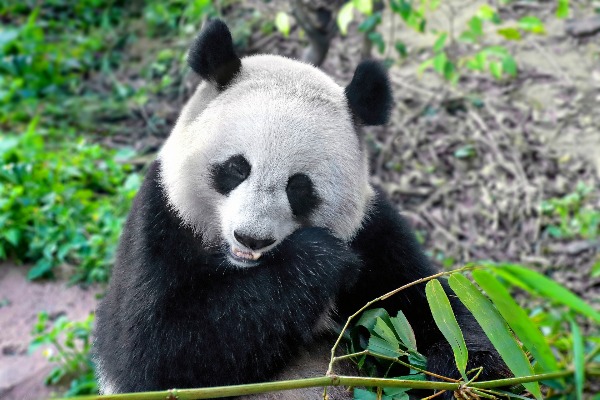
After breakfast, go to the [Giant Panda Breeding Research Base] to watch the giant pandas, a national treasure of China. They are soft and cute. Visit the "Wuhou Temple" to deeply understand the historical context of the Three Kingdoms and appreciate the thousand-year-old cultural heritage of Bashu. Watch the "Sichuan Opera Performance of Sichuan Style and Elegance" in the evening, immersively experience the Bashu intangible cultural heritage skills such as Sichuan Opera's face-changing, feel the unique charm of traditional folk art in Southwest China, and enrich the diverse Chinese cultural experience beyond the world heritage.
2 Attractions
  • Chengdu giant panda breeding research base

    Chengdu giant panda breeding research base

    The Chengdu Giant Panda Breeding Research Base is located on a shallow hill on the side of Futou Mountain in the northern suburbs of Chengdu City, Sichuan Province. It is a well-known research institution and tourist destination in China and even the world that integrates giant panda scientific research and breeding, public education and educational tourism. It is also a non-profit organization specializing in endangered wild animal research, breeding, protection education and educational tourism.

  • Temple of Marquis

    Temple of Marquis

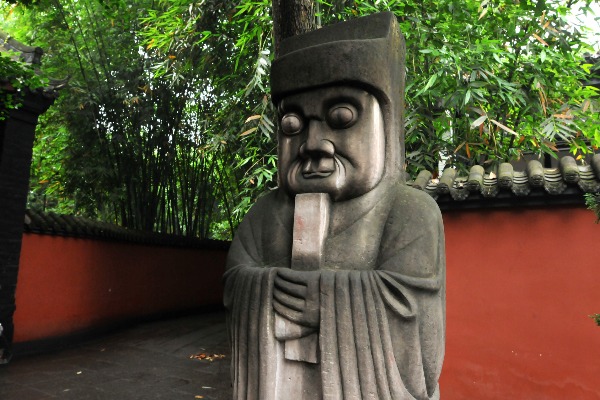
    Wuhou Temple began in 223 AD when Liu Bei's Hui Mausoleum was built. It is the only temple in China where monarch and minister worship together and the most famous memorial site for Zhuge Liang, Liu Bei and the heroes of the Shu and Han Dynasties. It is also the most influential museum of the Three Kingdoms relics in the country.

1 Experiences
  • Shufeng Yayun Theater

    Shufeng Yayun Theater

    The elegant charm of Shu was created in 1998. It covers the culture of the Three Kingdoms and the unique folk skills of Bashu: Sichuan opera, face-changing, fire-spitting, puppets, tea art, rolling lanterns, etc. It is a unique sight of Shu culture and is the only remaining folk pear garden in Sichuan with profound roots.

Day8
Chengdu-Chongqing
Go to the mountain city and unlock the magic city
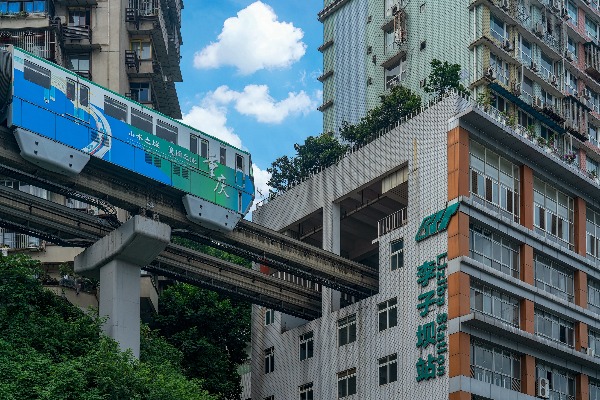
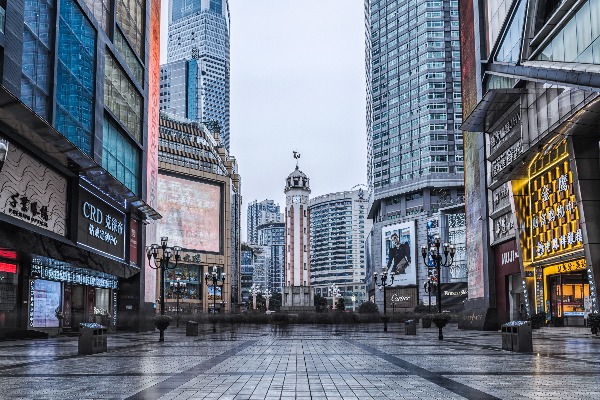
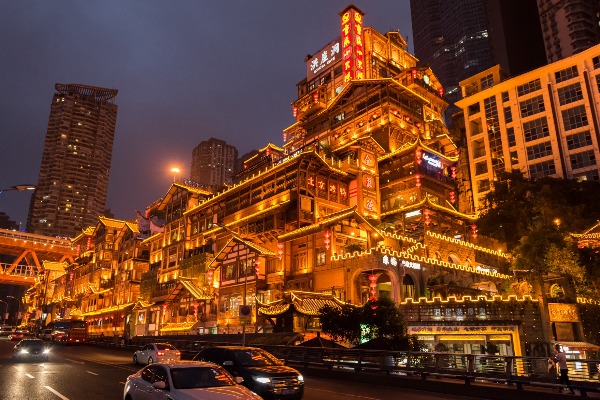
Drive from Chengdu to the magic mountain city of Chongqing to start the prelude to exploring the Southwest World Heritage. In the afternoon, check in the [Liziba Light Rail] to see the wonders of the light rail passing through the building; take the [Yangtze River Cableway](you need to queue up to buy tickets on site, so this ticket is not included in the itinerary) and take the "Sky Bus" to fly across the Yangtze River in the sky, overlooking the majestic intersection of the two rivers and the intertwined urban fabric of old and new buildings on both sides of the Taiwan Strait. Go to the [Jiefangbei Commercial Circle] to check in Chongqing landmarks and experience the blend of prosperity and history. The night tour [Hongya Cave] looks like a "Thousand and Thousand Spirited" soup house when it is lit up. You can walk to the Qianzaimen Bridge Observation Platform to shoot the Yuzhong Peninsula light show.
5 Attractions
  • liziba

    liziba

    Liziba Station of Monorail Line 2 is the only Louzhong Station in Chongqing, located on the sixth to eighth floors of a 19-story building. The station's "crossing" design is the first in the mainland of China, with a crossing length of 132 meters. Every day, there is a magical scene of a monorail passing through buildings and ravines and flying through the air.

  • Net red subway

    Net red subway

    Chongqing is jokingly called a "Magic 8D City" by netizens because of its unique terrain, and many wonderful buildings often explode various social networking sites. Among them, a seemingly extremely ordinary but very rare "Internet celebrity attraction"-Liziba Light Rail Station "Crossing the Building Light Rail" is undoubtedly one of the best. Because it was very fantasy, it aroused the curiosity of many people and rushed to check in.

  • Monument for Liberation business center

    Monument for Liberation business center

    The Liberation Monument, formerly known as the Victory Monument of the Anti-Japanese War, is the only national monument in China commemorating the victory of the Chinese nation in the Anti-Japanese War to commemorate Chongqing's great contribution to the country. Jiefang Monument is located in Yuzhong District, Chongqing City, at the intersection of Minquan Road, Minzu Road and Zourong Road. It is a historical witness of the victory of the Anti-Japanese War and the liberation of Chongqing. Most of the stele is white, and some places are flesh-colored. There are several big clocks on the top, facing in all directions. Every time the hour comes, a sound will ring. The tower is octagonal and has several antennas at the top.

  • Yangtze River cableway

    Yangtze River cableway

    The Yangtze River Cableway, or the Yangtze River Passenger Cableway, is located in Chongqing, China. It is the second cross-river cableway in Chongqing, China (the first is the Chongqing Jialing River Cableway) and belongs to the national AAA scenic spot.

  • Hongyadong folk style area

    Hongyadong folk style area

    The Hongyadong Traditional Folk Style Area is adjacent to Cangbai Road in Jiefangbei in the north and Jiangbin Road in the south. The project has a total length of about 1.2 miles along the river and a total commercial construction area of more than 50000 square meters. It is mainly composed of the "Hangjiao Building" style with the most traditional Bayu architectural characteristics. In line with the scattered heights of the buildings, it is based on the mountains. Through mountain building techniques such as layered platforms, hanging feet, staggered stacking, and facing cliffs, the five major business formats such as catering, entertainment, leisure, health care and characteristic cultural shopping are organically integrated together. It has formed a unique commercial pattern of "three-dimensional aerial pedestrian street". It is currently the large-scale commercial building with the most hierarchical texture and commercial landscape in Chongqing City.

Day9
Chongqing
The Buddhist Code on the Cliff: Two Rivers Night Tour of CyberChongqing
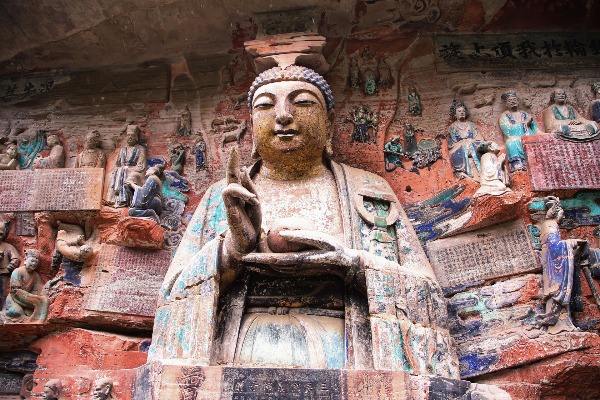
Today, we will go to the Dazu Stone Carving, which was included in the World Heritage List in 1999. During the Tang and Song Dynasties, craftsmen spent decades carving tens of thousands of statues on red cliffs. There are few places in the world where Buddhism, Taoism, and Confucianism can be simultaneously integrated. It is a legacy treasure of southern folk art comparable to the royal heritage of the north. In the evening, we will start the [Two Rivers Night Tour] by boat and overlook the bright night view of the mountain city. The combination of dynamic and static forces will fully unlock the dual charm of the mountain city and the city.
1 Attractions
  • Dazu Rock Carvings

    Dazu Rock Carvings

    The Dazu Stone Carvings are located in Dazu District, Chongqing Municipality directly under the Central Government of China, 167 kilometers away from the Ninth District of Chongqing's main city. There are 74 more than 50,000 religious stone carvings. It is a religious cliff stone carving from the late Tang and early Song periods. It mainly focuses on Buddhist themes, with Confucian and Taoist statues displayed together, especially the cliff statues on Beishan and Baodingshan. The Beishan Cliff Statue is located in Beishan, 1.5 kilometers north of Dazu District, Chongqing City.

1 Experiences
  • Chongqing Two Rivers night tour

    Chongqing Two Rivers night tour

    "I didn't see the night view, but I didn't go to Chongqing." Chongqing Two Rivers Tour refers to taking a sightseeing cruise ship and traveling on the Yangtze River and Jialing River at night. The night view of the mountain city was famous as early as the Qianlong period of the Qing Dynasty. It was listed as one of the twelve scenic spots in Bayu by Wang Erjian, the then magistrate of Ba County. The "Two Rivers Tour" combines Chongqing's mountains and rivers with Chongqing's night scenery to become a city business card. It is the best window for the outside world to be intuitive, three-dimensional, dynamic, all-round, close-up, understand and show the charm of Chongqing.

Day10
Chongqing
Searching for the tranquility of the ancient town, a complete journey of world heritage
After breakfast, stroll through the "Ciqikou Ancient Town" and experience the folk fireworks of old Chongqing and the thousand-year-old Bashu market culture in the bluestone ancient alleys. Based on the exclusive drop-off and return flight, this panoramic Chinese civilization collection journey spanning four cities and checking in five world-class cultural heritages, with an overview of royal etiquette, the heroic souls of the Qin and Han Dynasties, the ingenuity of the Tang and Song Dynasties, and Bashu fireworks has been successfully concluded.
1 Attractions
  • Ciqikou Ancient Town

    Ciqikou Ancient Town

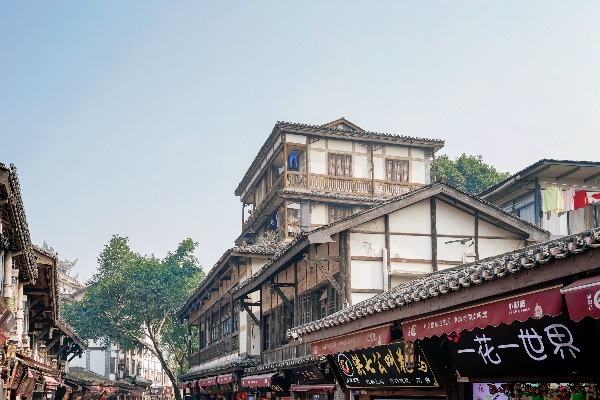
    Ciqikou Ancient Town is located on the bank of the Jialing River in Shapingba District, Chongqing City. It is adjacent to the Jialing River in the east, Shapingba in the south, Tongjia Bridge in the west, and Shijingpo in the north. Ciqikou Ancient Town has a unique landform of "one river, two streams, three mountains and four streets." Ma 'anshan sits among them, with Jinbi Mountain on the left and Fenghuang Mountain on the right. The three mountains are in the distance. Fenghuang and Qingshui double streams flow out in parallel, and the Jialing River flows from the north, forming a natural lane. Ciqikou Ancient Town was built in the Song Dynasty. In 1998, Ciqikou Ancient Town was identified by the State Council as a key protected traditional street in Chongqing City. In 2010, it was selected as a famous historical and cultural street in China. It is a key protected traditional street in Chongqing City that has evolved through thousands of years of changes.