• loading.......

[My Chef Friend · 7-Day Gansu Tour] Mogao Caves + Mingsha Mountain + Seven-Colored Danxia Landform + Desert Stargazing + Dunhuang Mural Copying Workshop + “Encore Dunhuang” Performance + Lanzhou Beef Noodle Chef Exchange + Jiayuguan Barbecue + Ganzhou Cuoyuzi (Hand-Rolled Fish-Shaped Noodles)

Destination Place

Lanzhou

Travel Days

7 days

Highlights

  • Explore the culture of the Silk Road, from the Gansu Provincial Museum to the Mogao Caves in Dunhuang.

  • Savor distinctive local delicacies, from Lanzhou beef noodles to Zhangye cuoyuzi, and enjoy their unique flavors.

  • The destination offers a diverse array of signature activities, including chef-led exchanges, mural copying workshops, and desert stargazing.

Itinerary

Day1
Lanzhou
[Pre-Tour Introduction]: From Lanzhou to Dunhuang, this is no ordinary Gansu loop. We engage with inheritors of intangible cultural heritage to uncover the thousand-year legacy behind a single bowl of beef noodles. Carrying the warmth of that bowl, we journey along the Hexi Corridor. Wuwei, Zhangye, Jiayuguan, and Dunhuang—names once confined to history books—transform into highways beneath our wheels, Gobi vistas outside our windows, and the flavors of the Northwest on our tongues. Guided by my chef friend, we begin with a bowl of noodles to help you appreciate the depth of the Hexi Corridor and immerse yourself in the vibrant everyday life along the Silk Road.

[First Glimpse of the Silk Road, Settling in Lanzhou]: Today marks the start of your journey. Fly independently to Lanzhou, where a dedicated representative will meet you upon arrival and transfer you to your hotel for rest. In the evening, feel free to explore Zhengning Road Night Market at your leisure, sampling local specialties such as hand-grabbed mutton and milk-and-egg fermented rice soup, and immersing yourself in Lanzhou’s nightlife and culinary culture. [Note]: Transportation today is limited to airport pickup only.

[Helpful Tips]:
1. The Hexi Corridor Silk Road route covers a vast area with scattered attractions, resulting in relatively long driving times on many days. If you are prone to motion sickness, please bring your own anti-motion-sickness medication in advance.
2. Gansu experiences significant day-night temperature swings, dry air, and intense UV radiation, with frequent wind and sand in the Hexi Corridor. Be sure to pack a windproof jacket, high-SPF sunscreen, sunglasses, a hat, and moisturizing skincare products. Adjust your clothing as needed and ensure comprehensive protection.
3. Northwestern cuisine centers on beef, mutton, and wheat-based dishes, with flavors leaning toward salty, umami, and spicy profiles and higher fat content. Zhengning Road Night Market offers a wide variety of snacks; we recommend tasting in moderation to avoid overindulgence. Those with sensitive stomachs should prepare gastrointestinal medications in advance.
4. Driving times provided in the itinerary are for reference only and may vary depending on actual road conditions.
1 Attractions
  • Zhengning Road Snack Night Market

    Zhengning Road Snack Night Market

    Zhengning Road Snack Night Market stretches along an entire street. The few-hundred-meter alley is always bustling with lively crowds and vibrant energy, its air thick with the aromas of sizzling street food that draw in food lovers from near and far. On summer evenings, you can order a variety of local delicacies, sit at open-air tables, enjoy the cool night breeze, and savor your meal while watching the lively hustle and bustle go by—a truly relaxing experience. The thriving night market of Lanzhou has a charm all its own.

Day2
Lanzhou-Wuwei
**Dialogue with the Master Chef of Lanzhou Beef Noodles: Exploring the Cultural Heritage of the Yellow River and the Silk Road**

After breakfast, head to the **Gansu Provincial Museum** to explore the thousand-year cultural lineage of Gansu Province. A highlight will be viewing the museum’s prized treasure, the “Bronze Galloping Horse” (also known as “Horse Treading on a Flying Swallow”), offering a comprehensive understanding of Gansu’s rich historical heritage and regional characteristics.

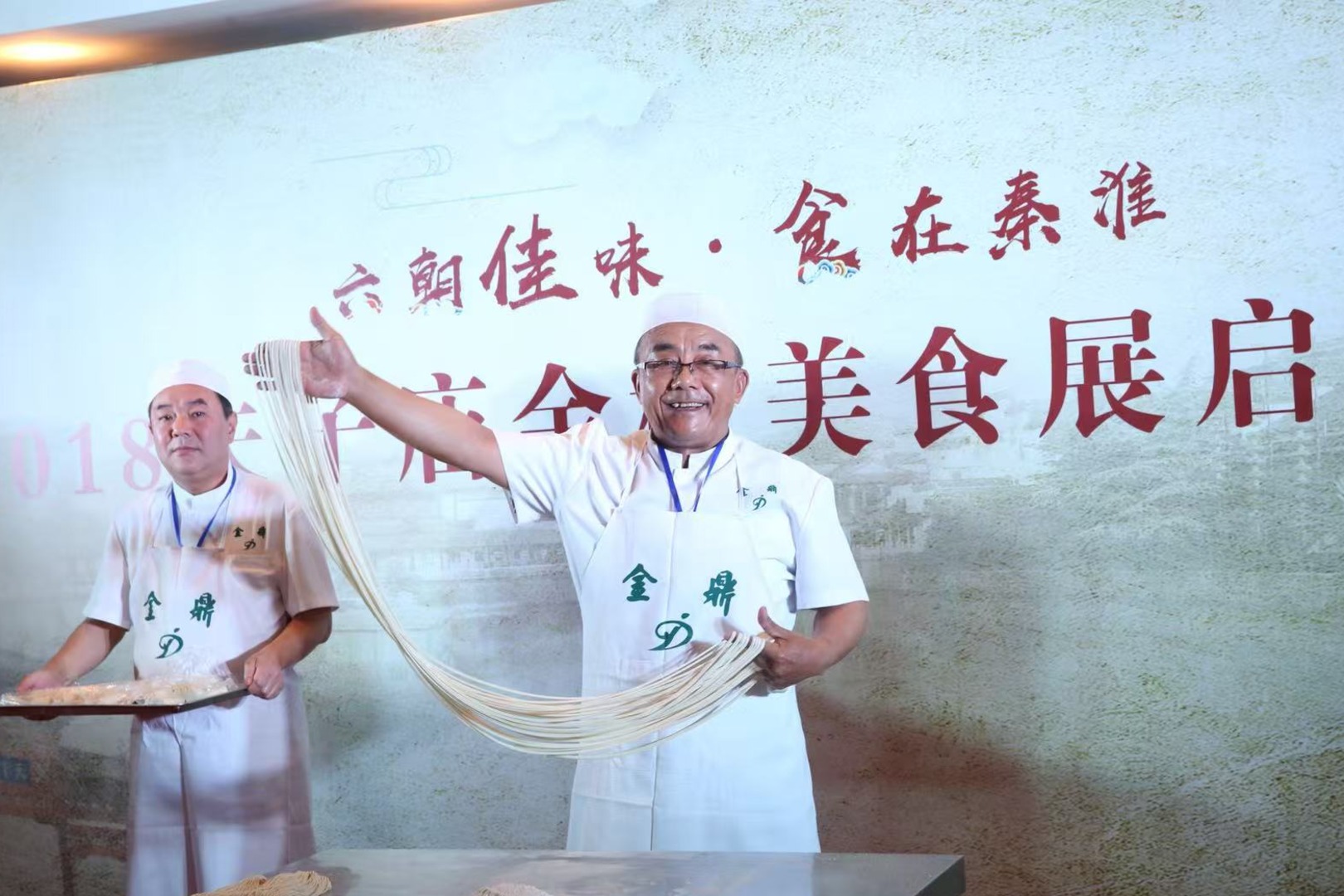
At noon, visit a renowned local Lanzhou beef noodle restaurant for the centerpiece experience of today’s itinerary: an interactive session with the master chef. We are honored to have Mr. Ma Wenbin, the fourth-generation inheritor of the prestigious “Ma Baozi” Lanzhou beef noodle legacy, share insights in person. He will recount the century-old heritage of Lanzhou hand-pulled noodles and break down the essential techniques behind this culinary art. Following the discussion, enjoy an authentic bowl of Lanzhou beef noodles, served with specially prepared beef and signature side dishes, immersing yourself in the craftsmanship and distinctive Northwestern flavors embodied in every bite.

In the afternoon, check off the “Three Iconic Yellow River Sights”: Zhongshan Bridge, Baita Mountain (White Pagoda Mountain), and the Yellow River Mother Sculpture. Stroll along the banks of the Yellow River, watch its mighty waters flow through the city, and appreciate the unique mountain-and-river charm of “Jincheng” (Lanzhou’s historic name).

Afterward, travel by vehicle to Wuwei (approximately 3.5 hours). Upon arrival, check into your hotel and take time to rest and recharge.

**Friendly Reminder:**
Mr. Ma Wenbin’s availability must be confirmed in advance. In the unlikely event that he is unexpectedly unavailable, a senior chef from the same culinary lineage will step in to host the session.
4 Attractions
  • Gansu Province Museum

    Gansu Province Museum

    The largest museum in Gansu Province is rich in cultural relics, allowing a comprehensive understanding of the history and culture of various parts of Gansu and the ancient Silk Road. The Silk Road exhibition on the second floor is the essence of the whole museum. The treasure of the town hall,"Horse Stepping on the Swallow", and the picture bricks of the post emissary of China postal symbol are all here. The Buddhist museum displays Buddhist culture with different characteristics of the Han, Tibetan and Western Regions, as well as grotto art from Dunhuang, Tianshui and other places. It is also very exciting.

  • Zhongshan iron bridge

    Zhongshan iron bridge

    Zhongshan Bridge is an iron bridge across the Yellow River located in Chengguan District, Lan 'Zhou City, Gansu Province. It was built in the 33rd year of Guangxu of the Qing Dynasty (1907). It was initially named "Lanzhou Yellow River Iron Bridge" and later renamed "Zhongshan Bridge." All bridge building materials were shipped from Germany to Tianjin in the 33rd year of Guangxu (1907), and then transferred from Tianjin to Lanzhou by the Gansu General Administration of Foreign Affairs. The engineers who built the bridge were American Man Baoben and German Dero, and the person in charge of the construction was Liu Yongqi from Tianjin. The construction personnel were mainly 69 foreign workers and Chinese craftsmen hired by German businessmen. It took three years to build the project and cost more than 36,000 taels of silver. It is known as the "First Bridge of the Yellow River in the World". The Zhongshan Bridge is engraved with the changes in Lanzhou's history through the ages and displays a picture of the splendid art of the Lanzhou people. Its viewing and commemorative value is more meaningful than its transportation role.

  • yellow River mother

    yellow River mother

    "Mother of the Yellow River" is a stone sculpture art work that expresses the mother river of the Chinese nation-the Yellow River. It is located in the middle section of Binhe Road on the south bank of the Yellow River in Lan 'Zhou City and on the north side of Xiaoxihu Park. It is 6 meters long, 2.2 meters wide, and 2.6 meters high. The total weight is more than 40 tons.

  • baita Mountain Park

    baita Mountain Park

    Baita Mountain Park is located on the north bank of the Yellow River near the center of Lan 'Zhou City. The entrance is connected to Zhongshan Bridge and is an important attraction in Lanzhou. The most famous is the ancient white tower on the top of the mountain, and there are many palace-like buildings in the mountains. There is a cable car on the other side of the river. Walking to the top of the mountain for about 20 minutes, you will reach the White Tower. From the top of the mountain, you can have a full view of Lan 'Zhou City, and at the foot of the mountain is the Yellow River. When the weather is good, you can find a tea shop on the top of the mountain and drink tea and chat on the breeze. It is very comfortable.

1 Experiences
  • Lanzhou Beef Noodle Chef Exchange

    Lanzhou Beef Noodle Chef Exchange

    In Lanzhou, beef noodle soup is the city’s very breath. Ma Wenbin guards not just a recipe, but the ironclad rule of “crystal-clear broth and bone-deep meat aroma.” Behind his name lies a century of masterful stock, time-honored traditions, and enduring pride.

Day3
Wuwei-Zhangye
【Exploring the Legacy of Han Dynasty Tombs, Tracing the Origins of China’s Grotto Art】

After breakfast, head to the Leitai Han Tomb, a brick-chamber tomb dating back to the late Eastern Han Dynasty. Delve into the flourishing culture and funeral traditions of the Hexi Corridor during the Han era.

Next, drive (approximately 1 hour) to Tiantishan Grottoes, hailed as “the cradle of Chinese grotto art.” Upon arrival, stand on the viewing platform to take in the breathtaking “Buddhist Realm amidst Mountains and Waters,” where the colossal Buddha statue, Huangyang River Reservoir, and the distant Qilian Mountains form a harmonious panorama. Immerse yourself in the historical significance and poignant atmosphere of this ancestral site of Chinese grotto art.

After the visit, travel by car to Zhangye (approximately 3.5 hours). Check into your hotel upon arrival, then head to Lekouzhai, a renowned intangible cultural heritage dining establishment, for dinner. Savor the local specialty, Ganzhou Cuoyuzi (hand-rolled fish-shaped noodles), accompanied by distinctive local side dishes, and immerse yourself in the charm of Zhangye’s authentic culinary culture. After dinner, return to your hotel to rest and recharge, preparing for the next day’s exploration of the Danxia Landform.
2 Attractions
  • tiantishan grottoes

    tiantishan grottoes

    Tiantianshan Grottoes, also known as Liangzhou Grottoes, are commonly known as Dafo Temple. They are located in Dengshan Village, Zhangyi Town, 50 kilometers south of Liangzhou District, Wuwei City. They were built in Beiliang during the Sixteen Kingdoms period of the Eastern Jin Dynasty and have a history of about 1600 years. Tiantian Mountain has a towering peak and rugged road. It is difficult to climb and is shaped like a suspended ladder. Therefore, it is named Tiantian Mountain. The top of the mountain is covered with snow all year round, making it one of the eight scenic spots in ancient Liangzhou.

  • leitai han tomb

    leitai han tomb

    A large-scale masonry tomb from the late Eastern Han Dynasty was discovered under the Lei Tai stage in October 1969. It is famous for the unearthed cultural relics and treasures and the bronze galloping horse, a symbol of China's tourism. Leitai was an ancient place where the Thunder God was sacrificed. It was named after the Leizu Temple built in the middle of the Ming Dynasty was built on an earthen platform about ten meters high. According to the inscription on the chest of the unearthed horse figurines, the Leitai Han tomb was the tomb of "Zhang Jun, the chief keeper of Zhangye", about 186-219 AD.

1 Experiences
  • Zhangye Lekouzhai Hand-Rolled Fish-Shaped Noodles

    Zhangye Lekouzhai Hand-Rolled Fish-Shaped Noodles

    “Cuo Mian Yu,” also known as “Cuo Yu Zi,” is a traditional noodle dish from Zhangye, Gansu Province, named for its resemblance to small fish. Prepared in strict accordance with time-honored methods, the dough is made using saline-alkaline water and hand-rolled with consistent pressure to ensure a chewy, resilient texture. These noodles are notable for their ability to withstand prolonged boiling without becoming mushy. The dish has been included in Zhangye’s municipal-level intangible cultural heritage list.

Day4
Zhangye-Jiayuguan
Encounter the Hidden Beauty of Danxia, Reflect on History at the Mighty Pass

After breakfast, head to the Zhangye Seven-Color Danxia Scenic Area, one of China’s most stunning Danxia landforms. Under the sunlight, the multilayered, colorful hills reveal a mesmerizing gradient of red, yellow, orange, green, and purple hues, resembling an artist’s palette spilled by the heavens.

Following your visit, travel by car to Jiayuguan (approximately 2.5 hours). Upon arrival, explore the Jiayuguan Fort, known as “The First Mighty Pass Under Heaven.” Stand atop the westernmost point of the Ming Dynasty Great Wall and marvel at its grandeur while immersing yourself in the profound historical legacy of the Great Wall culture.

After the tour, check in to your hotel for some rest. For dinner, enjoy specially arranged Jiayuguan-style barbecue, savoring the unique flavors of frontier cuisine and experiencing the lively local atmosphere.

Helpful Tips: The Jiayuguan Fort features numerous steps and can be quite windy along the wall. Please watch your step while climbing and wear comfortable, non-slip footwear.
2 Attractions
  • Zhangye Colorful Danxia Scenic Area

    Zhangye Colorful Danxia Scenic Area

    The Qicai Danxia Scenic Area in Zhangye City features the most typical Danxia landforms developed in the arid regions of northern China. Its colorful hills are renowned for their vivid hues, interlaced stratification, majestic momentum, and spectacular vistas. The Wanxiang Tulin Valley Danxia Landscape Area boasts forest-like clusters of peaks that vary in density and are arranged in a harmonious, staggered pattern. With their extraordinary and seemingly supernatural shapes, these formations embody grandeur, peril, wonder, elegance, and serenity all at once.

  • Jiayuguan Pass Fortress

    Jiayuguan Pass Fortress

    The Jiayuguan Pass fortress is situated in the middle of the narrowest valley at Jiayu Pass, atop the highest peak of Jiayu Mountain. The walls extending from both flanks of the pass traverse desert and Gobi terrain, connecting northward for 8 kilometers to the Xuabi (Hanging Wall) section of the Great Wall at Heishan (Black Mountain), and southward for 7 kilometers to the “First Beacon Tower under Heaven.” As the western terminus and commanding stronghold of the Ming Dynasty’s Great Wall, it has long been regarded as the most strategic gateway in the Hexi Corridor.

1 Experiences
  • Jiayuguan Barbecue

    Jiayuguan Barbecue

    The art of making Jiayuguan barbecue is a traditional grilling craft from Jiayuguan City in Gansu Province. Its history dates back to the Wei and Jin dynasties, as evidenced by depictions of barbecue scenes in mural paintings found in local tombs from that period. The preparation typically features meat from local Qilian sheep or young castrated rams, sliced and skewered on iron rods. The skewers are grilled over charcoal fires while being seasoned with refined salt, cumin, chili powder, and other spices. Throughout the cooking process, the meat is continuously turned and basted with a flavorful marinade, with careful attention paid to heat control and technique. Today, Jiayuguan barbecue boasts a wide variety of offerings and has become a signature culinary emblem of the region.

Day5
Jiayuguan-Dunhuang-Guazhou
Where the Gobi Desert Meets Art, and Dunhuang Greets the Starry Sky

After breakfast, depart from Jiayuguan and head into the heart of the Guazhou Gobi Desert (approximately 3 hours by car) to visit two popular land-art installations: “Son of the Earth” and “Boundless.” Then continue on to Dunhuang (about 1.5 hours by car). Upon arrival, take some time to rest before experiencing the immersive performance “Encore Dunhuang.” This walk-through show takes you on a journey through a millennium of Silk Road history, revisiting Dunhuang’s historical transformations and human stories, and allowing you to feel the depth and power of its culture.

In the evening, enjoy a desert stargazing experience. Guided by professionals, gaze up at the Milky Way and identify constellations, immersing yourself in the vastness of the universe. After the activity, return to your hotel in the city for overnight stay.

Helpful Tips:
1. The sand at Mingsha Mountain is fine and easily gets into shoes and socks. We recommend wearing sandals or bringing shoe covers. Seal valuables properly to prevent sand damage.
2. Nighttime temperatures in the desert vary greatly. Bring a warm jacket for stargazing to stay comfortable.
2 Attractions
  • son of the earth

    son of the earth

    The sculpture “Son of the Earth” is situated on the Hongshanpo Gobi Desert in Guazhou County. Although it is a work of art, it avoids any sense of rigidity; instead, it appears as a lifelike infant—endearing and innocent, with eyes tightly closed, lying quietly on its stomach, much like a child nestled in its mother’s embrace, sleeping in serene tranquility. We humans are akin to children of Mother Earth; only within her embrace can we find such profound peace. Through this sculptural installation, the designer aims to awaken public awareness of the importance of protecting our planet.

  • unbounded

    unbounded

    "Boundless" is the second work by Professor Dong Shubing of Tsinghua University in Guazhou. It is based on the architectural styles in the Tang Dynasty Sutra paintings of Yulin Grottoes. It combines various artistic concepts such as traditional China architectural styles, traditional China graphic patterns, and China calligraphy and writing art. It effectively utilizes the characteristics of sufficient light and wind in the desert to build the "mirage" with tangible materials and shapes. Above the desert.

2 Experiences
  • Stargazing in the desert

    Stargazing in the desert

    The night at Mingsha Mountain offers a perfect stage for stargazing. The Milky Way arches across the sky above, its starlight spilling over the undulating sand ridges and tracing flowing lines of silver. Sitting on the warm surface of the sand, you can simultaneously feel the earth’s breath and the vastness of the cosmos. This dialogue between desert and stars is both serene and awe-inspiring.

  • see Dunhuang again

    see Dunhuang again

    "Seeing Dunhuang Again" will reproduce the entire process of Mogao Grottoes from its opening to its prosperity, and then to the revelation of the mysterious veil of the thousand-year-old Mogao. Each interpretation space will reconstruct the connection point between today's people and history, take you through time and space, dream back to thousands of years, draw closer to history, and span ancient and modern times; let you feel the development process of Dunhuang for thousands of years, let you touch the dust of the divine domain of Dunhuang in the desert, and let you touch the inheritance and virtues of Dunhuang folk culture; watch performances while walking, see again while experiencing, visit the past and ask about the present, talk with the ancients, learn from the present, move forward, cut through time and space, and reproduce historical prosperity.

Day6
Dunhuang
Tracing the Cultural Heritage of Dunhuang, Immersed in the Moonlit Sands and Spring

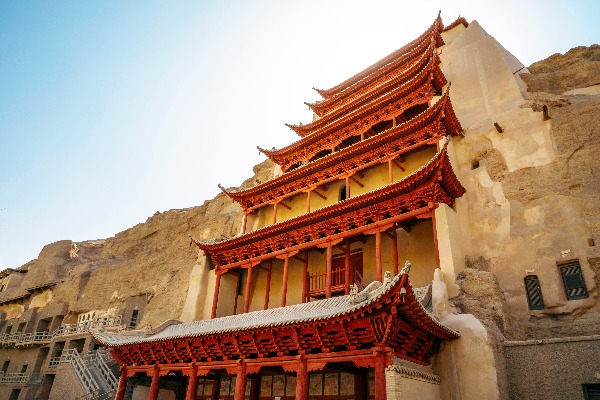
After breakfast, head to the UNESCO World Heritage Site, the Mogao Grottoes. Explore these millennium-old cave temples, admire the exquisite murals and painted sculptures, and delve into the history of their construction, the achievements of Buddhist art, and the brilliant legacy of Silk Road civilization.

In the afternoon, enjoy a unique cultural experience: mural copying. Under the guidance of professional instructors, hand-copy simplified versions of classic murals, immersing yourself in the artistic charm of Dunhuang’s frescoes and preserving a memento of this thousand-year-old culture through brush and ink.

In the evening, visit Mingsha Mountain (Echoing Sand Mountain) and Yueyaquan (Crescent Lake), where desert sands and spring waters coexist in breathtaking harmony. Optionally, you can try camel riding and sand sliding for an additional fee, climb the dunes, and take in panoramic views of Crescent Lake, experiencing the desolate beauty and grandeur of the vast desert.

After your excursion, head to Shazhou Night Market to freely savor local Dunhuang delicacies such as donkey meat with yellow noodles and apricot-skin drink, immersing yourself in the vibrant nighttime atmosphere of the city.
2 Attractions
  • The mogao grottoes

    The mogao grottoes

    The Mogao Grottoes Scenic Area consists of two parts: the Mogao Grottoes Digital Display Center and the Mogao Grottoes. The Mogao Grottoes Digital Display Center will show short films about the Mogao Grottoes. The grottoes have been excavated for thousands of years and have a large number of murals, grottoes, cultural relics, etc. They are world-famous Buddhist art resorts. The artistic characteristics of the high grotto are mainly reflected in the clever combination of buildings, statues and Dunhuang murals, which vividly and harmoniously express the artistic styles of multiple dynasties.

  • The singing crescent lake scenic area

    The singing crescent lake scenic area

    Mingsha Mountain and Crescent Lake, where desert sands and spring waters coexist, are one of Dunhuang’s iconic landmarks. As the evening glow spills across the landscape, Mingsha Mountain seems draped in a shimmering golden veil, majestic and mysterious. The dunes stretch endlessly in rolling waves, with golden-brown light and shadow flowing across their surfaces, as if whispering tales of the vastness and profundity of the great desert.

2 Experiences
  • Experience of copying ancient methods of Dunhuang murals

    Experience of copying ancient methods of Dunhuang murals

    Dunhuang murals are the main part of Dunhuang art. They are huge in scale and superb in craftsmanship. They contain a remarkable aesthetic style of "sublime and elegant, symmetry and harmony, feminine and masculine, tragic and heroic, solemn and romantic". Under the explanation and guidance of professional teachers, we copy and color, and the completed works can be taken away.

  • Shazhou Night Market

    Shazhou Night Market

    Shazhou Night Market is an important tourist attraction on the Dunhuang tourist route. It is located on Yangguan East Road in Dunhuang City and is the largest night market in Dunhuang City. For its distinctive local characteristics and rich folk customs, it is known as Dunhuang's "Night Scene Map" and "Style Painting". The night market is divided into five major business areas: flavor snacks, handicrafts,"Sanpaotai" teahouse, and agricultural and sideline products.

Day7
Dunhuang
**A Fulfilling Culinary Journey Along the Silk Road, Concluding with a Heartwarming Return**

After breakfast, airport transfers will be arranged according to your flight schedule. Looking back on our seven-day journey—from the artisanal heritage of Lanzhou beef noodles to the millennia-old historical sites and natural wonders of the Hexi Corridor—every landscape and every bite has embodied the rich culture and charm of Northwest China. May this encounter with our chefs, the Silk Road, and its majestic mountains and rivers become your most cherished memory of the Northwest, inspiring and warming your path forward with craftsmanship and the spirit of distant horizons.