• loading.......

"Measuring Time: First Encounter with Tibet - 6 Days in Lhasa" Sunshine City of Lhasa + Yamdrok Lake + Holy Lake Namtso + Norbulingka

Destination Place

Lasa

Travel Days

6 days

Highlights

  • Namtso, a sacred site in the hearts of pilgrims

  • Yamdrok Lake: Without seeing its waters, you cannot truly know beauty.

  • Stop in Lhasa to visit the “Pearl of the Plateau,” the Potala Palace.

Itinerary

Day1
Lasa
Today marks the start of your journey. You will be traveling to Lhasa from various parts of China. A private vehicle will be waiting for you at the airport (or railway station) to transfer you to your hotel in Lhasa. If you arrive early, you are free to explore the area around your hotel after check-in—perhaps enjoy a cup of traditional Tibetan sweet tea. The pristine blue skies, snow-capped mountains, and warm sunshine offer you a heartfelt welcome.

[Helpful Tips]:
1. Ensure adequate rest and sleep to help prevent altitude sickness.
2. It is recommended not to take a shower upon arrival to avoid catching a cold.
3. Bring any personal medications you regularly use when traveling to Tibet.
4. The Tibetan people are devout Buddhists; please respect local customs and traditions.
Day2
Lasa
After breakfast, take a vehicle to the Potala Palace, the highest and most majestic palace in the world, and the most important symbol of Lhasa and Tibet as a whole. The Potala Palace is also a sacred site in the hearts of all pilgrims.

Next, visit Jokhang Temple, a true holy site and center of Tibetan Buddhism. As the saying goes, “If you haven’t been to Jokhang Temple, you haven’t really been to Lhasa.” Then stroll along Barkhor Street (also known as Bakuo Street), where you can still see local Tibetans performing sacred kora (circumambulation) rituals, expressing their deep devotion.

Recommended Dining: Makye Ame Restaurant & Sinjin Lhamo Authentic Tibetan Cuisine

Helpful Tips:
1. When visiting the Potala Palace, do not bring water, beverages, or other liquids, nor knives, lighters, or other fire-starting devices. Do not touch or caress Buddha statues and other cultural relics.
2. It is advisable not to wear skirts or overly short pants.
3. Without permission, please do not discourteously photograph or film pilgrims and monastery monks.
3 Attractions
  • Eight Street

    Eight Street

    Barkhor Street, also known as Bajiao Street, is a famous transit road and commercial center in Lhasa. It relatively completely preserves the traditional appearance and living style of the ancient city. The original street of Bakor Street is just a single turning road around Jokhang Temple, which Tibetans call the "Holy Road". It has gradually expanded into a large old neighborhood around Jokhang Temple.

  • Jokhang Temple

    Jokhang Temple

    The Jokhang Temple was built by the Tibetan king Songtsan Gampo. It has a history of more than 1300 years and holds a supreme position in Tibetan Buddhism. The Jokhang Temple is the most glorious Tibetan building in Xizang. It is also the earliest civil structure building in Xizang. It also created a Tibetan-style Pingchuan style temple city bureau style.

  • Potala Palace

    Potala Palace

    The Potala Palace is the highest and majestic palace in the world. It is the most important symbol of Lhasa and even Xizang, and a holy place in the hearts of all pilgrims. It is mainly composed of the Red Palace and the White House. The highest Red Palace in the middle is an important place for holding religious ceremonies, and the surrounding White House is mainly the venue for the Dalai Lama's activities. The Potala Palace was photographed at three locations: Yaowangshan Observation Deck on the southwest side of the Potala Palace, the artificial lake bank of Zongjiao Lukang Park, and the Potala Palace Square.

Day3
Lasa
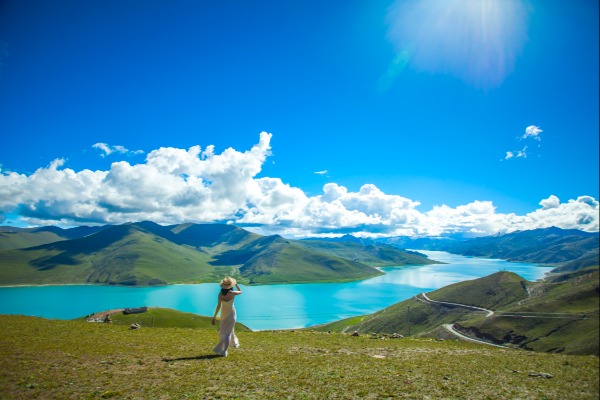
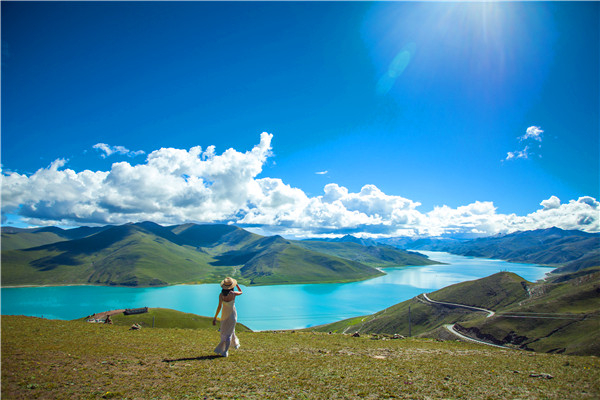
Today, we’ll drive to Yamdrok Lake (Yamzho Yumco). In Tibetan culture, Yamdrok Lake is revered as “the turquoise earring dropped by a goddess.” No matter which vantage point you choose, you won’t be able to take in the lake’s full panorama. Afterward, we’ll return to Lhasa. For dinner, enjoy an all-you-can-eat Wagyu beef hotpot. (One-way driving time is approximately 3 hours; round-trip about 6 hours.)

Food Recommendations:
- Restaurants near Yamdrok Lake: Yamdrok Polar Hotel Lakeside Restaurant, Lao Zhao Restaurant at Yamdrok Lake, and others.

Helpful Tips:
1. Food and drinks around Yamdrok Lake tend to be pricey, so consider bringing some snacks and water with you before departure.
2. Along the route, you may encounter beautifully adorned Tibetan Mastiffs. Photo opportunities come with a fee—be sure to negotiate the price before taking pictures.
3. Winds can be strong at the mountain pass, so it’s advisable to bring a warm jacket.
1 Attractions
  • Yambdrok

    Yambdrok

    YamdrokTso, referred to as Yanghu, meaning "Jasper Lake" in Tibetan, is one of the three sacred lakes in Xizang. It is like a coral branch, so it is also called the "Coral Lake above" in Tibetan. Langkazi County, located in the Shannan Prefecture of Xizang, is about 70 kilometers southwest of Lhasa. It is also known as the three sacred lakes in Xizang, along with Namco and Mapang Yongco. It is the largest inland lake at the northern foot of the Himalayas. The beauty of lakes and mountains makes it the best in southern Tibet. Yangzhuoyong Coo covers an area of 675 square kilometers and the lake surface is 4,441 meters above sea level. From Lhasa to Yanghu, you need to cross the 5030-meter Gambala Pass.

Day4
Lasa-Namucuo-Dangxiong
After breakfast, as you travel from Lhasa to Namtso, you can spot the snow-capped peaks of the Nyenchen Tanglha Mountains in the distance—perennially blanketed in pristine white snow. Colorful five-hued prayer flags flutter across the landscape, creating a striking and picturesque scene against the azure sky and drifting clouds.

You will then arrive at Namtso, the foremost of Tibet’s three sacred lakes, where the breathtaking vista of turquoise waters merging with the blue sky offers a serene escape from the hustle and bustle of everyday life.

In the evening, check into your hotel in Damxung County: the Minshan Kangma Hot Spring Hotel.
2 Attractions
  • Namtso

    Namtso

    Namtso is the highest saltwater lake in the world, the largest lake in Xizang, and a holy place in the eyes of pilgrims. The five islands in the lake stand among the vast blue waves. Buddhists legend that they are the incarnations of the five Buddhas. Anyone who goes to the Shenhu to pay homage to the Buddha will worship piously; Believers say that every time during the Year of the Sheep in the Tibetan calendar, Buddhas, Bodhisattva, and Dharma-spreading gods gather to set up an altar in Namtso for a grand Dharma meeting. At this time, they go to worship and turn the lake to recite scriptures once, which is better than the usual ritual and turn the lake to recite scriptures 100,000 times. The blessing is boundless. Therefore, every April 15th, monks and believers do not hesitate to travel long distances to go to Namtso to turn the lake. The waves are like clouds, and the grand occasion is unprecedented.

  • nyainqentanglha mountain

    nyainqentanglha mountain

    The Nyainqêntanglha Shanmai Mountains are a broken mountain located in the Tibet Autonomous Region of China. It runs across central and eastern Xizang and is an eastward continuation of the Gangdese Mountains. It extends to the southeast and connects with the Boshula Mountains in the southwest of the Hengduan Mountains. The middle part protrudes slightly northward. At the same time, Xizang is divided into three major areas: northern Tibet, southern Tibet and southeastern Tibet. Nangjabawa Peak near the great turn of the Yarlung Zangbo River in the southeast.

Day5
Dangxiong-Lasa
Depart in the morning and arrive in Lhasa. Then travel by vehicle to Sera Monastery, one of the six major monasteries of the Gelug school of Tibetan Buddhism. Together with Drepung Monastery and Ganden Monastery, it is known as one of the “Three Great Monasteries of Lhasa.”

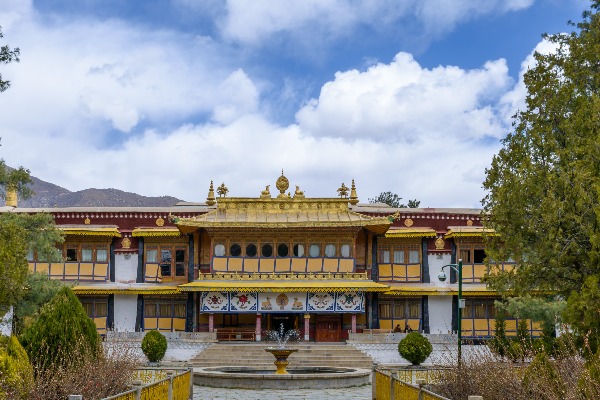
Afterward, visit Norbulingka, which was first built in the 1740s during the time of the 7th Dalai Lama. It was subsequently expanded by successive generations and became the summer palace of the Dalai Lamas.

At the end of the tour, check into your hotel in Lhasa.
2 Attractions
  • Salad temple

    Salad temple

    Sera Monastery is the second largest temple in Tibetan areas. It houses many Buddha statues and also contains a large number of precious art treasures such as scriptures, exquisite Thangka, pile embroidery, and murals. Among them, Sera Monastery has always been famous in Tibetan areas and is also the focus of visiting Sera Monastery. The rear mountain of Sera Temple is located high, and the top of the mountain can see a panoramic view of Lhasa City. It is a resort for mountain climbers.

  • Norbulingka

    Norbulingka

    Norbulingka means "Baby Park" in Tibetan and is the summer palace of successive Dalai Lama. Whenever summer comes, the Dalai Lama moves from the Potala Palace to Norbulingka for office. The building is mainly composed of Gesang Po Zhang, Golden Po Zhang, and Dadeng Mingjiu Po Zhang. It has 374 rooms. It is one of the largest artificial gardens in Xizang, with excellent scenery and many historical relics.

Day6
Lasa
Today is your departure day for the return journey. Please arrive at the airport two hours in advance.