• loading.......

Blossom Season Reunion: 7-Day Tour of Kaifeng, Zhengzhou, and Luoyang Highlights: Laojun Mountain, Shenzhou Peony Garden, Wansui Mountain Martial Arts City, Shaolin Temple, Longmen Grottoes, Henan Museum, White Horse Temple, Luoyi Ancient City, Yingtian Gate, and Tang Palace Banquet with Musical Performance

Destination Place

Kaifeng

Travel Days

7 days

Highlights

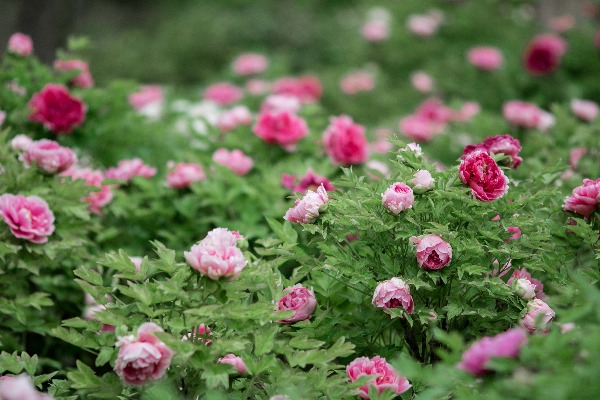
  • “Imperial Capital for a Millennium, City of Peonies” — Admire the peonies and experience the time-honored heritage of Luoyang’s peony culture.

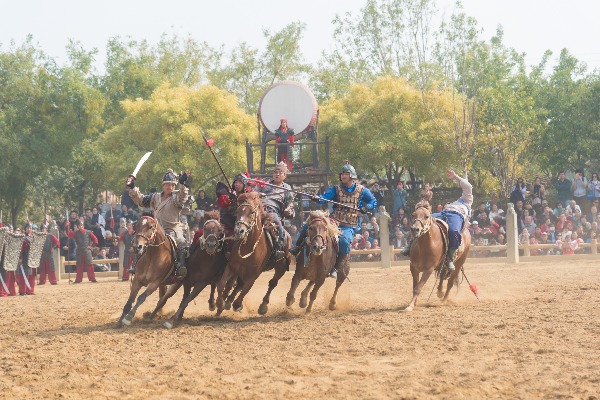
  • Wansui Mountain Wuxia City, jokingly referred to as the “Disney of Henan,” fully immerses visitors in a vibrant martial-arts world and is incredibly fun.

  • Reaching the summit of Laojun Mountain, you’ll find it truly deserves its reputation as “the unparalleled sacred realm under heaven, the world’s foremost immortal mountain.”

Itinerary

Day1
Kaifeng
Welcome to Kaifeng, Henan! Your trip to Kaifeng will be filled with explorations of history and culture. Upon your arrival, our company will arrange a dedicated driver to pick you up from the airport and take you to your hotel for rest.

Friendly reminder: Today’s services include only airport pickup and accommodation; no other services are included.
Day2
Kaifeng
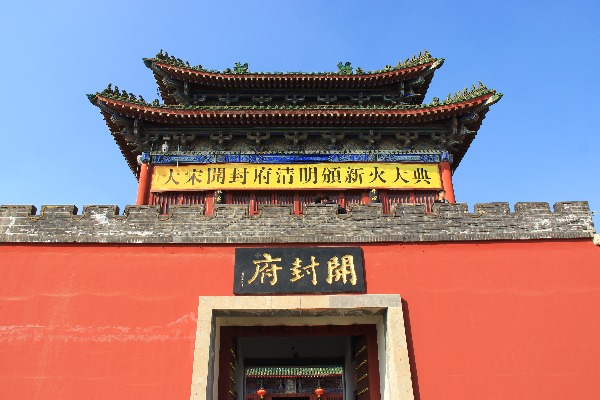
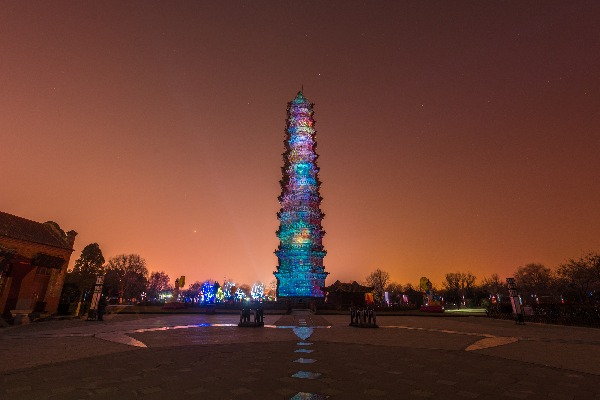
After breakfast, head first to Kaifeng Fu (Kaifeng Prefecture) to soak in the historical charm of this ancient capital with a millennium of heritage. Next, visit the Iron Pagoda of Kaifeng, where you can marvel at its grandeur while gaining deeper insights into Song Dynasty architecture.

Later, Wansui Mountain Martial Arts City awaits you. Thanks to its immersive experiences, exceptional value for money, and unique wuxia (martial arts) culture, it has surged in popularity in recent years to become a phenomenal cultural-tourism hotspot, affectionately dubbed “Henan’s Disney” by many netizens and visitors.
3 Attractions
  • Wansui Mountain Wuxia City

    Wansui Mountain Wuxia City

    Wansui Mountain Wuxia City is located in the middle section of Dongjing Avenue, Longting District, Kaifeng City, Henan Province. Situated in the northwest part of Kaifeng and adjacent to the Longting Lake Scenic Area, it covers an area of over 500 mu. Built on the site of the former National Forest Park, this themed scenic spot centers on the martial arts culture of the Northern Song Dynasty and offers a large-scale, multi-themed, multi-landscape tourist destination.

  • KaiFengFu

    KaiFengFu

    Kaifeng Prefecture is located on the north bank of Baogong East Lake. It is the government office of officials in Kyoto in the Northern Song Dynasty. It is known as the capital of the world and a national AAAA tourist attraction. Historical records show that there were 183 prefects in Kaifeng Prefecture in the Northern Song Dynasty, especially Bao Gong who was famous at home and abroad for serving as the seat of the Southern Government. The rebuilt Kaifeng Prefecture covers an area of more than 60 acres and has a building area of 13,600 square meters. It echoes the Baogong Temple located on Baogong West Lake and sets off with the rippling blue waves of the Sanchi Lake, forming a beautiful landscape of the East Mansion West Temple and pavilions and clear water.

  • Kaifeng Iron Tower

    Kaifeng Iron Tower

    The iron tower is located in the eastern half of the iron tower park on Beimen Street, Kaifeng City, Henan Province. It is an important cultural relic and a main attraction in the park. It was built in 1049 AD (the first year of Huangyou in the Northern Song Dynasty). It was one of the first batch of national key cultural relics announced by China in 1961 and is known as the "No. 1 Tower in the World." The iron tower is 55.88 meters high and has an octagonal 13 floors. Because this place was once Kaibao Temple, also known as the "Kaibao Temple Pagoda", and because it is covered with brown glazed bricks and mixed with iron, people have called it the "iron tower" since the Yuan Dynasty. In more than 900 years, it has experienced 37 earthquakes, 18 strong winds, and 15 floods, and it stands tall.

Day3
Kaifeng-Zhengzhou
After breakfast, you can continue exploring Wansui Mountain Martial Arts City.

Afterward, you will head to Zhengzhou to visit Only Henan Drama Fantasy City, an innovative cultural tourism project that blends modern technology with traditional art. Through captivating performances, it offers you a deeper understanding of Henan’s historical stories and cultural characteristics.

That evening, you will stay at the InterContinental Hotel located in Dennis Plaza in the heart of Zhengzhou.
2 Attractions
  • Wansui Mountain Wuxia City

    Wansui Mountain Wuxia City

    Wansui Mountain Wuxia City is located in the middle section of Dongjing Avenue, Longting District, Kaifeng City, Henan Province. Situated in the northwest part of Kaifeng and adjacent to the Longting Lake Scenic Area, it covers an area of over 500 mu. Built on the site of the former National Forest Park, this themed scenic spot centers on the martial arts culture of the Northern Song Dynasty and offers a large-scale, multi-themed, multi-landscape tourist destination.

  • Only Henan Opera City

    Only Henan Opera City

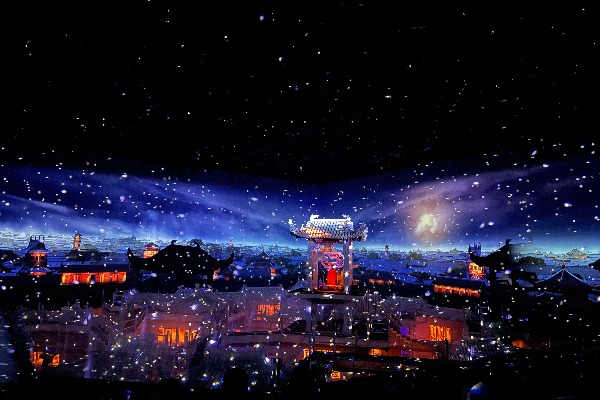
    It is a drama fantasy city with 21 theaters jointly built by Jianye Group and director Wang Chaoge. It is also the largest drama community in China. This is the masterpiece of "Only Series" created by director Wang Chaoge after "Impression" and "See Again". "Only Henan" uses immersive drama art as a technique and a unique "fantasy city" building as a carrier. By telling stories about "land, food, inheritance", it is committed to letting more people feel the charm of drama culture.

Day4
Dengfeng-Zhengzhou-Luanchuan
After breakfast, visit the Henan Museum to immerse yourself in the profound heritage of Central Plains culture.

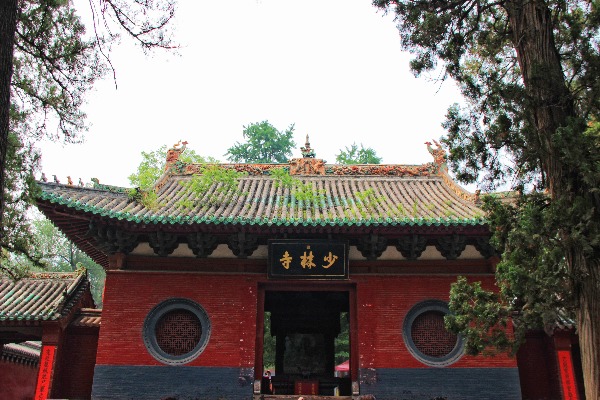
Then head to Dengfeng to explore Shaolin Temple, a UNESCO World Heritage Site. There, you’ll not only experience the solemnity and mystique of this ancient monastery but also have the opportunity to watch captivating martial arts performances and discover the allure of Chinese kung fu.

In the evening, check into a hotel near Laojun Mountain.
2 Attractions
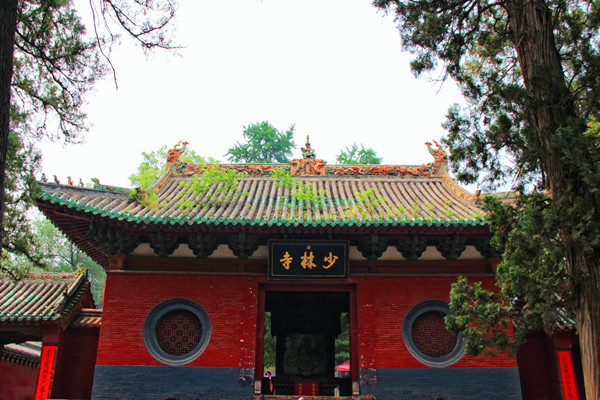
  • Shaolin Temple

    Shaolin Temple

    Shaolin Temple is located at the foot of Wuru Peak in Songshan Mountain in Dengfeng City, Henan Province. Because it is located in the dense jungle of Shaoshi Mountain in the hinterland of Songshan Mountain, it is named "Shaolin Temple". Shaolin Temple is the ancestral home of Han Buddhism and is known as "the number one temple in the world." It is famous all over the world because of the Shaolin Kungfu that has been intensively researched, created and continuously developed by successive Shaolin martial monks. There is a saying that "the world's kung fu comes from Shaolin, and Shaolin Kung fu is the best in the world." It is a national AAAAA tourist attraction in China, the seventh batch of national key cultural relics protection units, and a global low-carbon ecological scenic spot. The "Building Complex in the Sky and Earth" including the Shaolin Temple Permanent Residence, Tallinn and Chuzu Nunnery is a famous world cultural heritage.

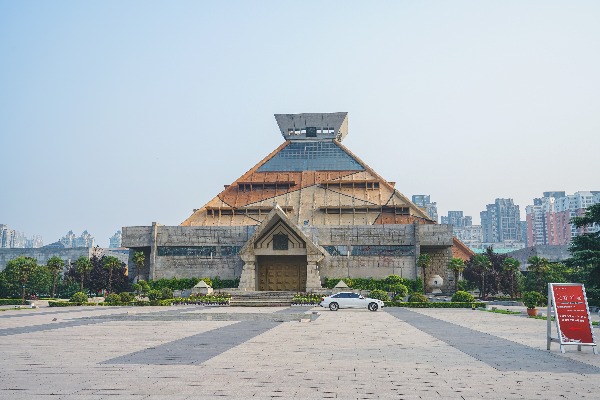
  • Henan Museum

    Henan Museum

    Henan Museum is located on Agricultural Road, Zhengzhou City, Henan Province. It is a national key museum. It is one of the earliest museums established in China and one of the first batch of national museums jointly built by the central and local governments. Exhibition of 140,000 cultural relics in its collection. Most of the cultural relics in the collection come from archaeological excavations in Shangqiu, Luoyang, Anyang, Kaifeng, Xichuan, Sanmenxia, Huixian, Xinzheng and other places in the early 20th century. Prehistoric cultural relics, Shang and Zhou bronzes, ceramics and jade ware of previous dynasties are the most distinctive. Among them, there are more than 5000 national first-class cultural relics and national second-class cultural relics, with extremely high historical, cultural and artistic value. Some of the collections are praised as important objects of the country.

1 Experiences
  • martial arts performance

    martial arts performance

    In order to better promote Shaolin culture, tourists and friends can better understand the unique charm of Shaolin Kung Fu and appreciate the outstanding style of Shaolin disciples. Shaolin Scenic Area arranges performances at fixed times every day.

Day5
Luoyang-Luanchuan
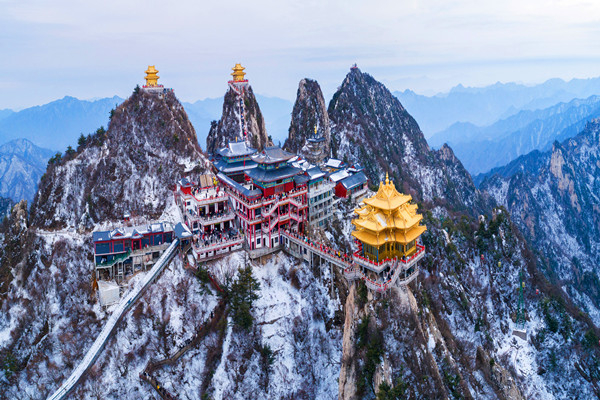
Today, we visit the renowned Laojun Mountain Scenic Area, a place celebrated not only for its stunning natural beauty but also for its profound cultural heritage. Hailed as “the unparalleled sacred realm under heaven, the world’s foremost immortal mountain,” it offers a unique blend of scenic splendor and spiritual significance.

By taking the Level 1 and Level 2 cable cars up the mountain, visitors can easily reach the core scenic area. After disembarking from the Level 2 cable car, pass through the Ethereal Tunnel and step into the Ten-Mile Picture Screen, where every step reveals a new vista, showcasing the spectacular granite peak forest. The journey culminates at the Golden Summit Taoist Temple Complex, perched at an elevation of 2,217 meters. Here, you’ll be awestruck by the “Celestial Palace above the Clouds,” enjoying the highlights of the site with minimal time and effort.
1 Attractions
  • laojunshan

    laojunshan

    It is said that Lao Tzu, the ancestor of Taoism in the Eastern Zhou Dynasty, once lived in seclusion and cultivated in this mountain, hence the name Laojun Mountain, which is the main peak of Funiu Mountain. At an altitude of more than 2,000 meters, there are official halls and temple communities. In ancient times, it was regarded as a Taoist holy place.

Day6
Luoyang
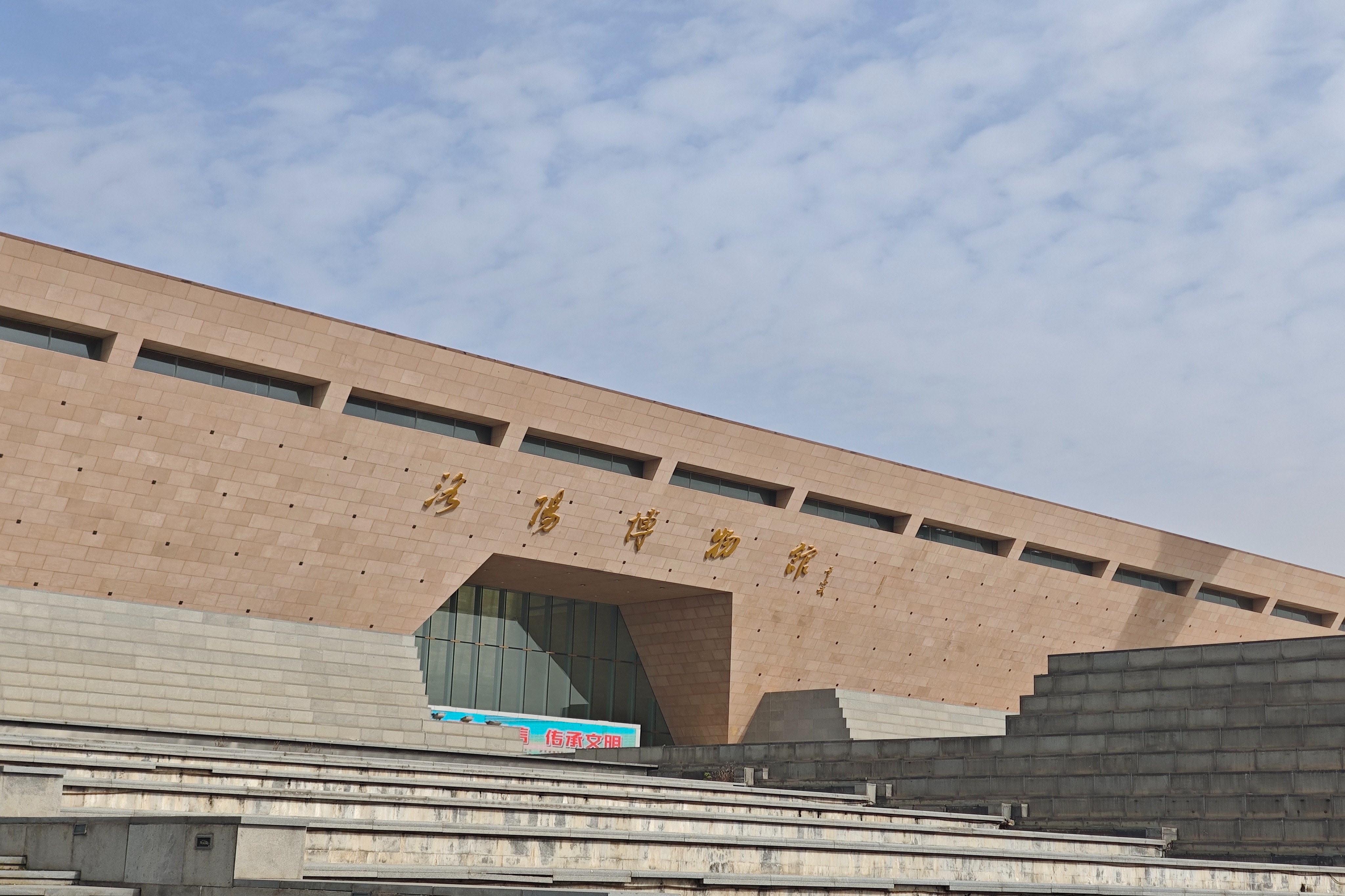
After breakfast this morning, your tour will begin with a visit to the Luoyang Museum, which houses an extensive collection of historical artifacts and offers deep insights into the city’s rich cultural heritage.

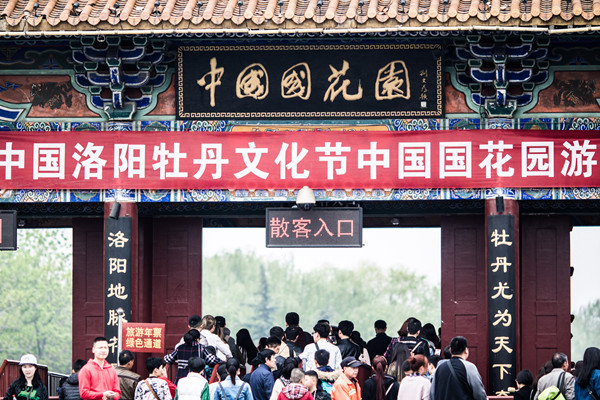
Next, you will head to China National Flower Garden, the main venue of the Cultural Festival. Steeped in history and easily accessible by metro, the garden features notable spots such as Chenxiang Tower, “Wangcheng Chunzao” (Early Spring in the Imperial City), and the Peony Fairy area, where you can admire a wide variety of peonies.

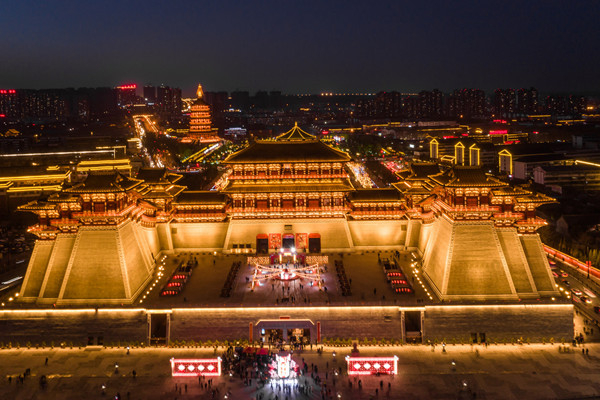
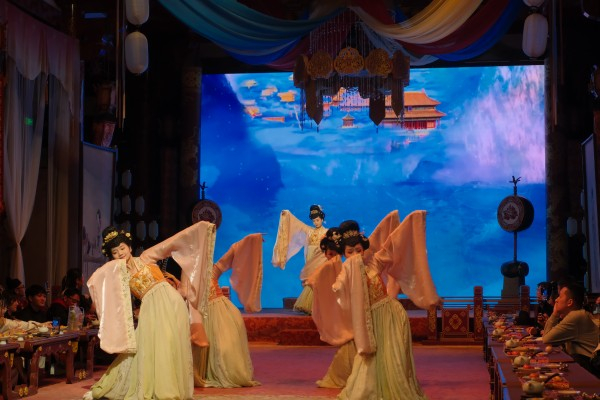
In the afternoon, you will visit the renowned Longmen Grottoes to appreciate the charm of ancient Chinese sculptural art. Returning to the city center in the evening, you’ll enjoy the night view of Yingtian Gate and experience “Tang Palace Music Banquet,” a large-scale immersive performance launched at Yingtian Gate of the Sui-Tang Luoyang City. Guests can don Hanfu attire, assume roles such as musicians or envoys, and “enter the palace for the banquet,” interacting in real time with NPCs to fully immerse themselves in the elegance of Tang Dynasty court costumes and the beauty of its music and dance.
4 Attractions
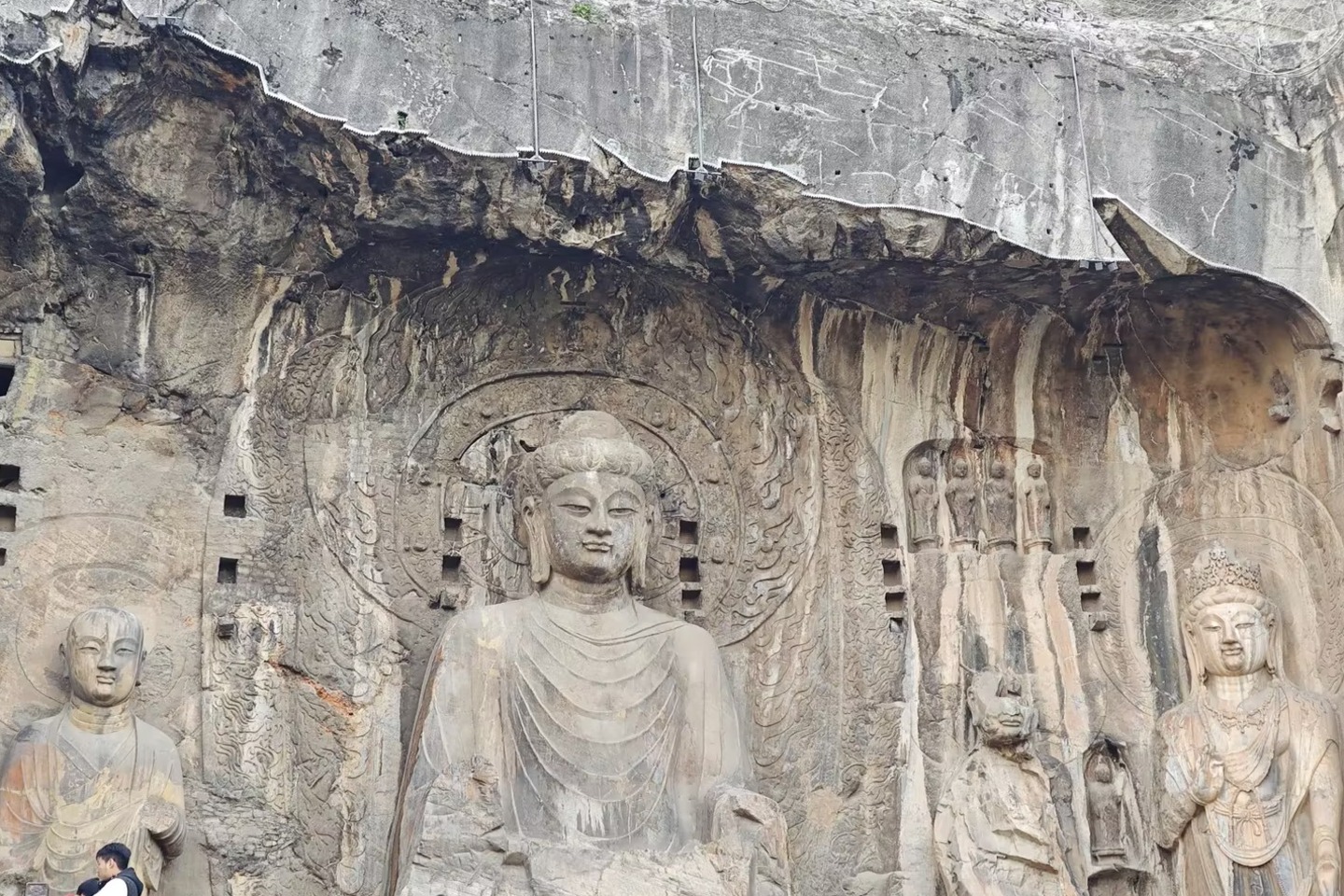
  • Longmen grottoes in Luoyang

    Longmen grottoes in Luoyang

    The Longmen Grottoes are one of the treasure houses of stone carving art in China. They are a world cultural heritage, a national key cultural relic protection unit, and a national AAAAA tourist attraction. They are located on Longmen Mountain and Fragrant Mountain on both sides of the Yi River in the southern suburbs of Luoyang City. Longmen Grottoes, Dunhuang Mogao Grottoes and Yungang Grottoes are also known as the three major grottoes in China.

  • Luoyang Museum

    Luoyang Museum

    Luoyang Museum is located on the central axis of the city, bordering the beautiful scenery of Luopu Park in the north and the Sui-Tang City Ruins Botanical Garden in the south. Adopting the design concept of being the world's most powerful, the overall building exterior is in the shape of a big tripod, and the overall building exterior is in the shape of a big tripod. Supported by the asymmetric spatial structure, we draw on garden techniques to set up courtyards and daylighting patios at the turning positions of the square streamline to make the space The layout achieves dynamic balance.

  • Yingtianmen Site in Luoyang City in the Sui and Tang Dynasties

    Yingtianmen Site in Luoyang City in the Sui and Tang Dynasties

    Yingtianmen is the main south gate of Ziwei City. It was built in the first year of the Daye of the Sui Dynasty (605) and was originally named Zetianmen. In the first year of the Shenlong Dynasty (705), the name was renamed Yingtianmen. It was later called Wufeng Tower and went through the Five Dynasties and the Northern Song Dynasty. Yingtianmen was an important place for the court to hold major state celebrations and diplomatic activities at that time. Ceremonies such as Emperor Gaozong of the Tang Dynasty captured King Baekje, Wu Zetian proclaimed himself emperor, and Emperor Xuanzong of the Tang Dynasty received Japan's eighth envoy to the Tang Dynasty were all held on the Yingtianmen Gate Tower, with functions similar to the current Beijing Wumen Gate. Yingtian Gate is a huge building complex in the shape of a "concave" that consists of gate towers, tower towers, east and west towers and their corridors and verandas between them.

  • China National Garden

    China National Garden

    The National Garden of China is located on the ruins of the ancient city of Sui and Tang Dynasties in Luonan. It is currently the largest peony garden in China. The garden takes the history and culture of the Sui and Tang Dynasties as its foundation and peony culture as its main content. It integrates history and culture, peony culture and garden landscape, fully demonstrating the beauty, clarity and tranquility of peony. More than 1000 varieties of peonies are now planted in the park. It is the largest and multi-variety peony garden in full bloom that you can see when you came to Luoyang in the early days.

1 Experiences
  • Tang Palace Music Banquet

    Tang Palace Music Banquet

    "Tang Palace Music Banquet" is an immersive performing arts carefully created by the Yingtianmen Ruins Museum in Luoyang. You can randomly select characters and through role-playing, experience Tang costumes, painting black eyebrows, tasting Tang tea, and climbing the Que Tower, and follow the NPC to serve the Wu Emperor. The tribute, the antique real-life scenes, and the ancient costumes of the actors allow you to immersively experience your dream of returning to the Tang Dynasty and traveling through the millennium.

Day7
Luoyang
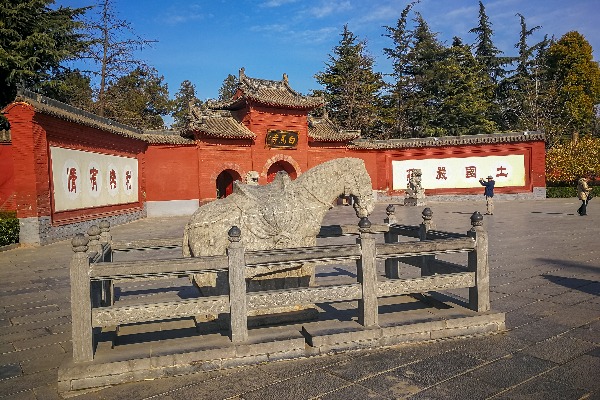
After breakfast this morning, head to White Horse Temple (Baima Si). Don’t miss the temple’s prized treasure: the Yuan-dynasty dry-lacquer statues made using the jiazhu technique. Start by exploring the historic halls along the central axis, including the Hall of the Heavenly Kings and the Great Buddha Hall. Be sure to visit the International Buddhist Halls area, where you can admire Thai, Burmese, and Indian-style pavilions and feel as if you’ve stepped abroad in an instant. Finish your visit at Qiyun Pagoda Courtyard to listen for the famed “Bell Chimes of White Horse Temple.”

Next, go to Shenzhou Peony Garden, just across the street from White Horse Temple—it’s worth combining both sites in one trip. If you visit during April’s peak bloom, you can stroll through landscapes reminiscent of the High Tang era and enjoy more than 400,000 peonies in full, vibrant bloom. Get up close to rare varieties like the “Black Peony” and “Green Peony,” and marvel at the year-round blossoms in the high-tech exhibition area.

In the afternoon, transfer to the airport according to your flight schedule, concluding a wonderful journey as you return home.

Helpful tip: We recommend booking a flight departing after 19:00.
2 Attractions
  • white Horse temple

    white Horse temple

    The Baima Temple in Luoyang, Henan Province is located 12 kilometers east of the Old City of Luoyang, Henan Province. It was founded in the 11th year of Yongping of the Eastern Han Dynasty (AD 68). It is the first ancient temple in China. It is world-famous Jialan. It is the first temple built after Buddhism was introduced to China. It is known as the "Ancestral Court" and "Source of Interpretation" of Buddhism in China. It has a history of more than 1900 years. The existing ruins and historic sites were left in the Yuan, Ming and Qing Dynasties. A large number of Yuan Dynasty dry-lacquer statues such as the Third Buddha, the Second Sky General, and the Eighteen Arhats are preserved in the temple, which are extremely precious.

  • Shenzhou Peony Garden

    Shenzhou Peony Garden

    Shenzhou Peony Garden is located opposite the Baima Temple in Luoyang, the source of Buddhism in China. It covers an area of 600 acres. It has the architectural style of the Tang Dynasty and the landscape of mountains and rivers. It collects 1021 famous and domestic peony varieties and more than 400,000 trees.