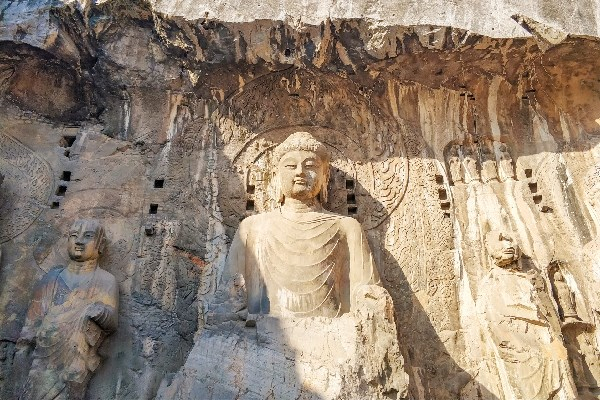
Welcome to China! You have arrived today in Luoyang, the ancient capital. Our company has arranged for a tour guide and driver to meet you at the airport and transfer you to your hotel for rest. After settling in, you may coordinate with your tour guide based on your preferences and schedule, and then head out to savor the local culinary delights.
[Only Henan: 7-Day Inbound Tour to Henan] Longmen Grottoes + Qingming Riverside Landscape Garden + Hulatang (Spicy Pepper Soup) + Shaolin Temple + Martial Arts Performance Workshop + Song Dynasty-Style Tea Whisking Experience
Destination Place
Luoyang
Travel Days
7 days
Highlights
It is a journey imbued with the genetic heritage of Chinese civilization, traversing millennia of imperial capitals and gaining insight into the culture of the Central Plains.
Savor Henan’s distinctive culinary specialties, experience Henan’s rich soup culture, and more.
Signature experiences: wearing traditional Chinese Hanfu, learning martial arts performances from Shaolin monk warriors at the Shaolin Temple, and participating in Diancha (traditional Chinese tea whisking).
Itinerary
Day1
Luoyang
Day2
Luoyang
This morning, you’ll savor Henan’s signature dish—Hu La Tang (spicy pepper soup)—and immerse yourself in the local soup-drinking culture. Discover the Henanese culinary philosophy: “Better to go without meat than to dine without soup.” Paired with an array of local snacks, this fragrant, flavorful broth offers an authentic taste of the Central Plains.
After breakfast, head to White Horse Temple (Baima Si), the first state-sponsored Buddhist temple built in China after Buddhism was introduced to the country. It is also the world’s only temple jointly administered by the governments of four nations and enjoys widespread renown across Southeast Asia. As the most internationalized Buddhist temple, White Horse Temple truly deserves its reputation as “the Number One Temple Under Heaven.”
Next, visit the Sui–Tang Grand Canal Culture Museum, which comprehensively showcases the history, culture, and significance of China’s Grand Canal during the Sui and Tang dynasties.
In the evening, explore Lijing Gate and the Yingtianmen Gate ruins of the Sui–Tang Luoyang City. Known as “the First Gate of the Sui and Tang,” Yingtianmen was the main southern entrance to the imperial palace complex of Luoyang, symbolizing imperial authority with its grandeur and majesty.
4 Attractions
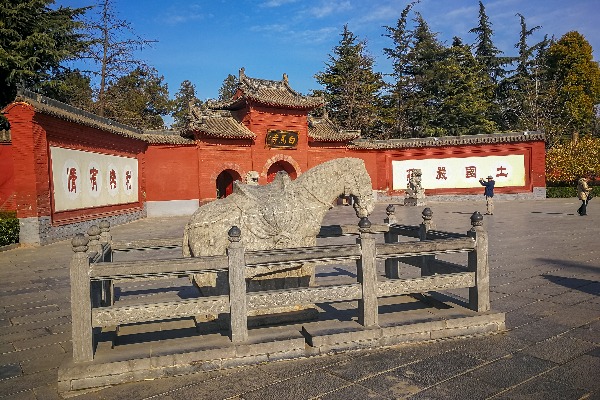
white Horse temple
The Baima Temple in Luoyang, Henan Province is located 12 kilometers east of the Old City of Luoyang, Henan Province. It was founded in the 11th year of Yongping of the Eastern Han Dynasty (AD 68). It is the first ancient temple in China. It is world-famous Jialan. It is the first temple built after Buddhism was introduced to China. It is known as the "Ancestral Court" and "Source of Interpretation" of Buddhism in China. It has a history of more than 1900 years. The existing ruins and historic sites were left in the Yuan, Ming and Qing Dynasties. A large number of Yuan Dynasty dry-lacquer statues such as the Third Buddha, the Second Sky General, and the Eighteen Arhats are preserved in the temple, which are extremely precious.
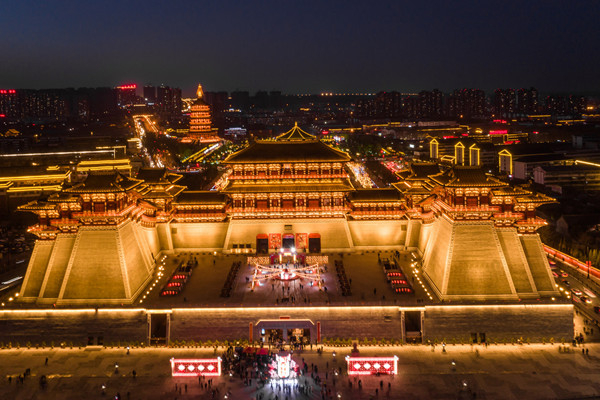
Yingtianmen Site in Luoyang City in the Sui and Tang Dynasties
Yingtianmen is the main south gate of Ziwei City. It was built in the first year of the Daye of the Sui Dynasty (605) and was originally named Zetianmen. In the first year of the Shenlong Dynasty (705), the name was renamed Yingtianmen. It was later called Wufeng Tower and went through the Five Dynasties and the Northern Song Dynasty. Yingtianmen was an important place for the court to hold major state celebrations and diplomatic activities at that time. Ceremonies such as Emperor Gaozong of the Tang Dynasty captured King Baekje, Wu Zetian proclaimed himself emperor, and Emperor Xuanzong of the Tang Dynasty received Japan's eighth envoy to the Tang Dynasty were all held on the Yingtianmen Gate Tower, with functions similar to the current Beijing Wumen Gate. Yingtian Gate is a huge building complex in the shape of a "concave" that consists of gate towers, tower towers, east and west towers and their corridors and verandas between them.
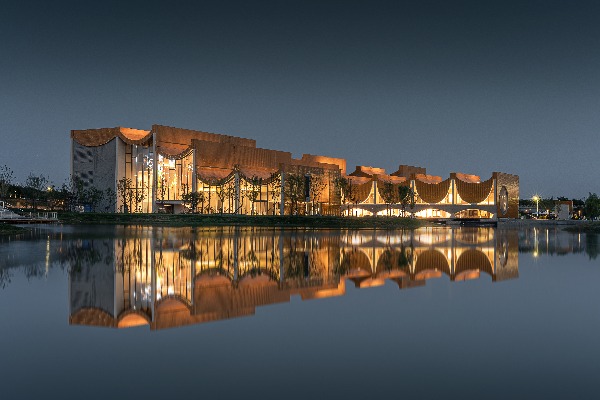
Sui and Tang Grand Canal Culture Museum
Luoyang Sui and Tang Dynasties Grand Canal Culture Museum is located at the center of the Sui and Tang Dynasties Grand Canal-the intersection of Luo River and Erhe River in Luoyang City. The venue is designed with the concept of "Yunhe River Source, Sui and Tang Rhyme, Heluo Technology" and extracts the arched elements of the Grand Canal as the basic structure. The arched structures support a magnificent building and also support people's historical memory and imagination of canal culture. The museum has a construction area of 33,000 square meters. The first and second floors are the permanent exhibitions of "National Games-Sui and Tang Dynasties Grand Canal Cultural Exhibition", and the third floor is the interactive experience exhibition of "One Grain of Rice Water Transport Journey". In addition, there is a temporary exhibition hall

Lijing Door
Lijing Gate is located in Xiguan, Luoyang City. Lijingmen is the symbol of the ancient city of Luoyang. Entering Wengcheng, on both sides of the north and south, there are thirteen golden dragon pillars symbolizing the ancient capital of Luoyang's thirteen dynasties. It looks like a row of warriors standing with their heads held high guarding the tower. Along the arc-shaped corridor of the Diaoliang and Painted Buildings, this was the place where officials and people sacrificed sacrifices to the gods and prayed for blessings and blessings. Here are the Heluo Cultural Corridor and the Emperor History Museum. Lijingmen has high and thick walls, a vast moon city, with heavy doors stacked on top of each other, and floating clouds above it. It has a majestic momentum, becoming the leader of the historical and cultural ancient city block of Luoyang's old city.

1 Experiences
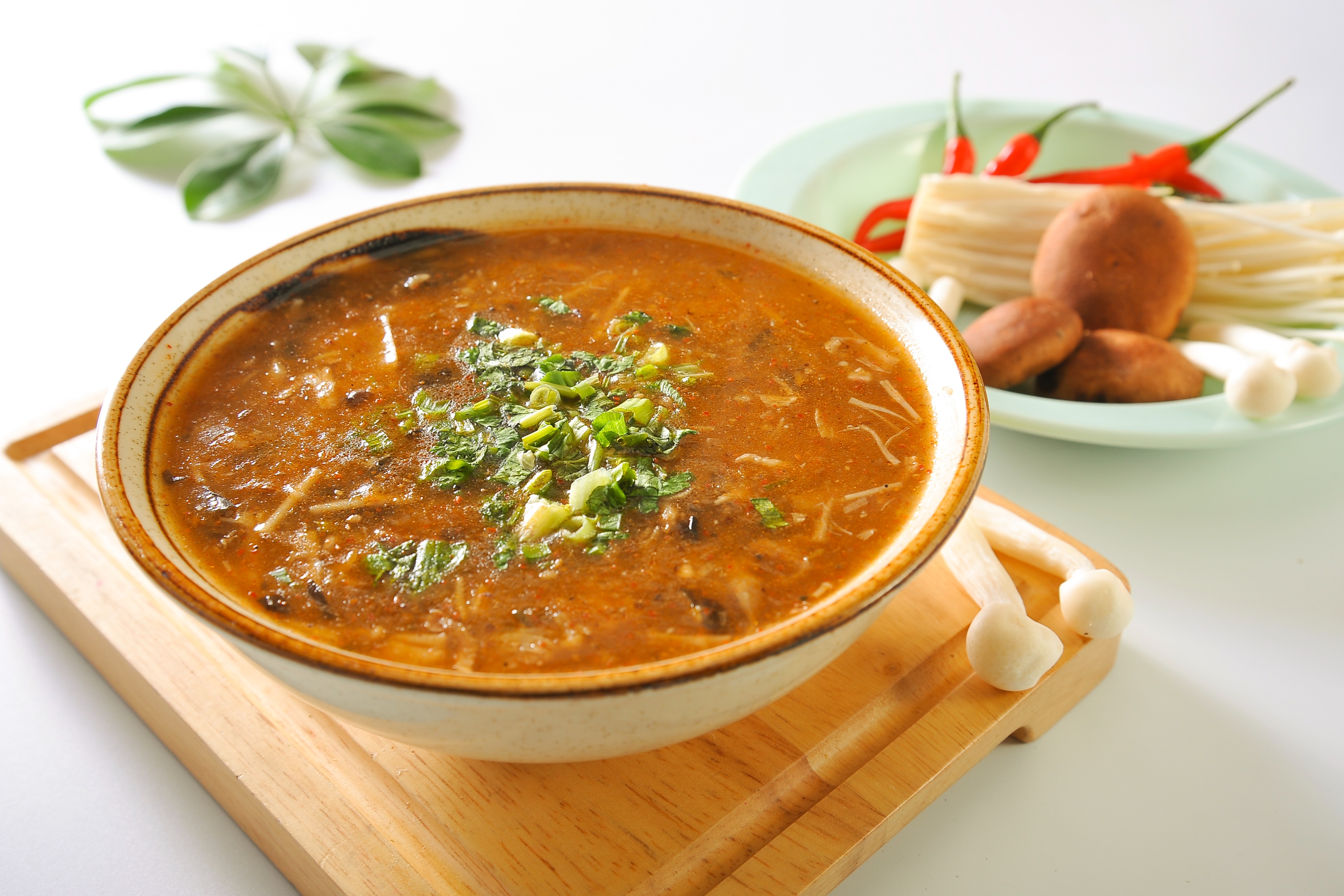
Hu La Tang (Spicy Pepper Soup)
Hulatang, also known as Hula Tang, is a traditional and iconic soup commonly enjoyed for breakfast in Henan Province, China. It is made with pepper, chili, beef or mutton, bone broth, starch slurry, thin vermicelli, daylily buds, peanuts, wood ear mushrooms, and other ingredients. Hulatang is popular across many provinces, including Henan, Shaanxi, Shandong, and Hubei, with diverse regional styles and distinctive preparation methods. Henan-style Hulatang mainly originated from the Beiwudu Town and Xiaoyao Town in the Shaying River basin. Beiwudu Hulatang evolved from Hui Muslim mutton broth, enriched with gluten and chopped scallions, emphasizing a harmonious blend of five flavors and offering a relatively mild, smooth, and mellow taste. In contrast, Xiaoyao Hulatang features abundant ingredients, a pronounced peppery aroma, a spicier profile, and a refreshing, invigorating flavor. In June 2021, the traditional craft of making Xiaoyao Hulatang in Xihua County was included in the National List of Representative Intangible Cultural Heritage Projects.
Day3
Luoyang
After breakfast, head to Luoyang Museum. As the saying goes, the best way to get to know a city is to visit its museum. The museum boasts an impressive collection of legendary artifacts, ensuring your visit will be well worth it.
Next, explore the Longmen Grottoes, which have a history of over 1,400 years. A UNESCO World Heritage Site and a National 5A-level tourist attraction, the Longmen Grottoes are regarded as one of China’s “Three Great Grottoes,” alongside the Mogao Caves in Dunhuang and the Yungang Grottoes in Shanxi. Renowned for their grand scale, exquisite craftsmanship, and profound cultural significance, they are hailed as the pinnacle of stone-carving art.
For dinner, savor the Luoyang Water Banquet, a celebrated traditional feast native to the Luoyang area. The name carries two meanings: first, every hot dish is served with broth or soup; second, dishes are presented sequentially like flowing water—each course is cleared before the next is brought out. The banquet features a balanced mix of meat and vegetarian options, diverse flavors, and a wide range of ingredients, offering a harmonious blend of sour, spicy, salty, and sweet tastes that are both comforting and delicious.
In the evening, visit Luoyi Ancient City, home to numerous historical sites. “Luoyi” is the ancient name for Luoyang, which served as the capital for thirteen dynasties, accumulating a rich tapestry of Chinese civilization. At night, Luoyi Ancient City becomes a favorite haunt among locals, lively and full of fun.
3 Attractions
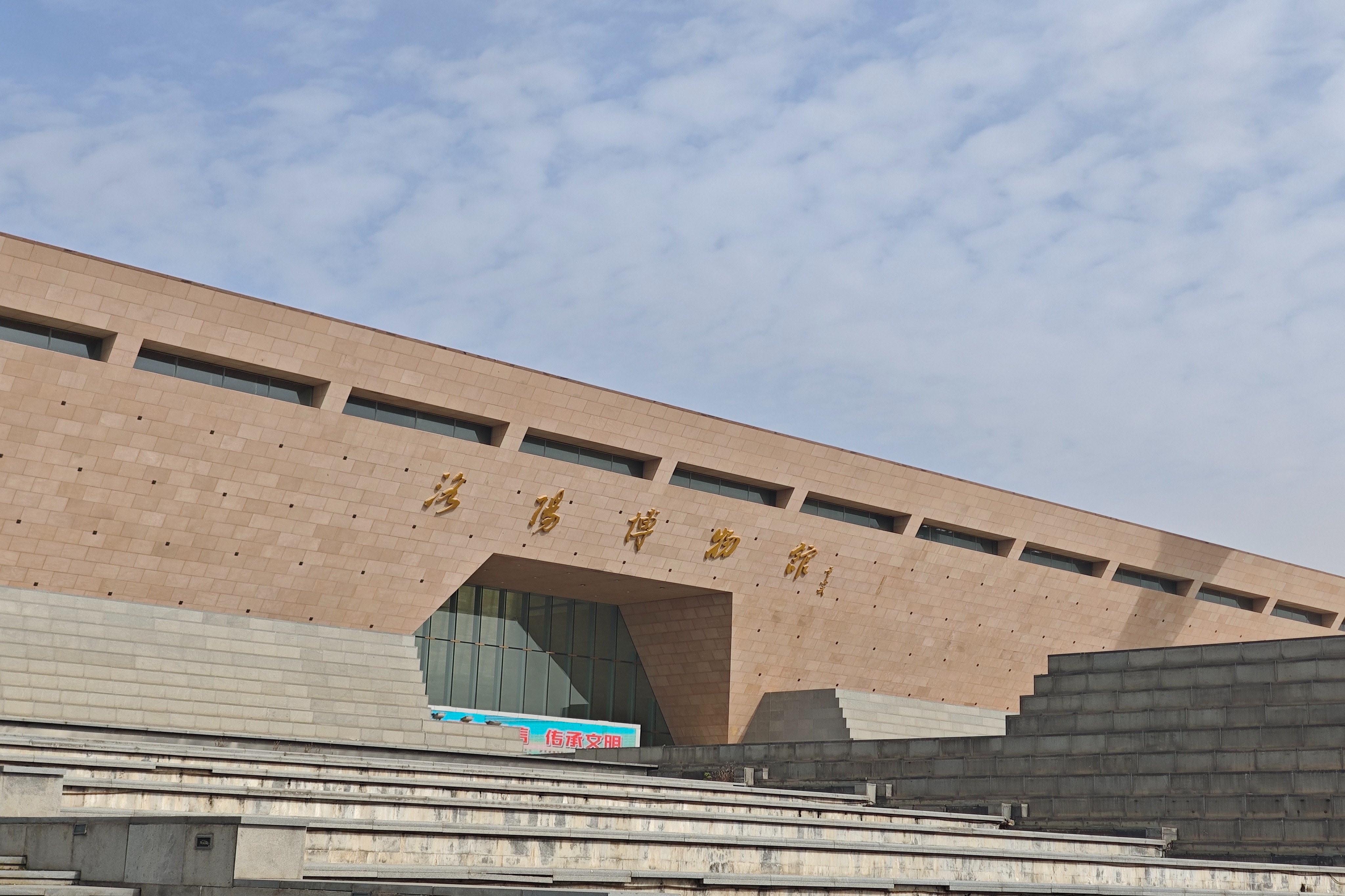
Luoyang Museum
Luoyang Museum is located on the central axis of the city, bordering the beautiful scenery of Luopu Park in the north and the Sui-Tang City Ruins Botanical Garden in the south. Adopting the design concept of being the world's most powerful, the overall building exterior is in the shape of a big tripod, and the overall building exterior is in the shape of a big tripod. Supported by the asymmetric spatial structure, we draw on garden techniques to set up courtyards and daylighting patios at the turning positions of the square streamline to make the space The layout achieves dynamic balance.
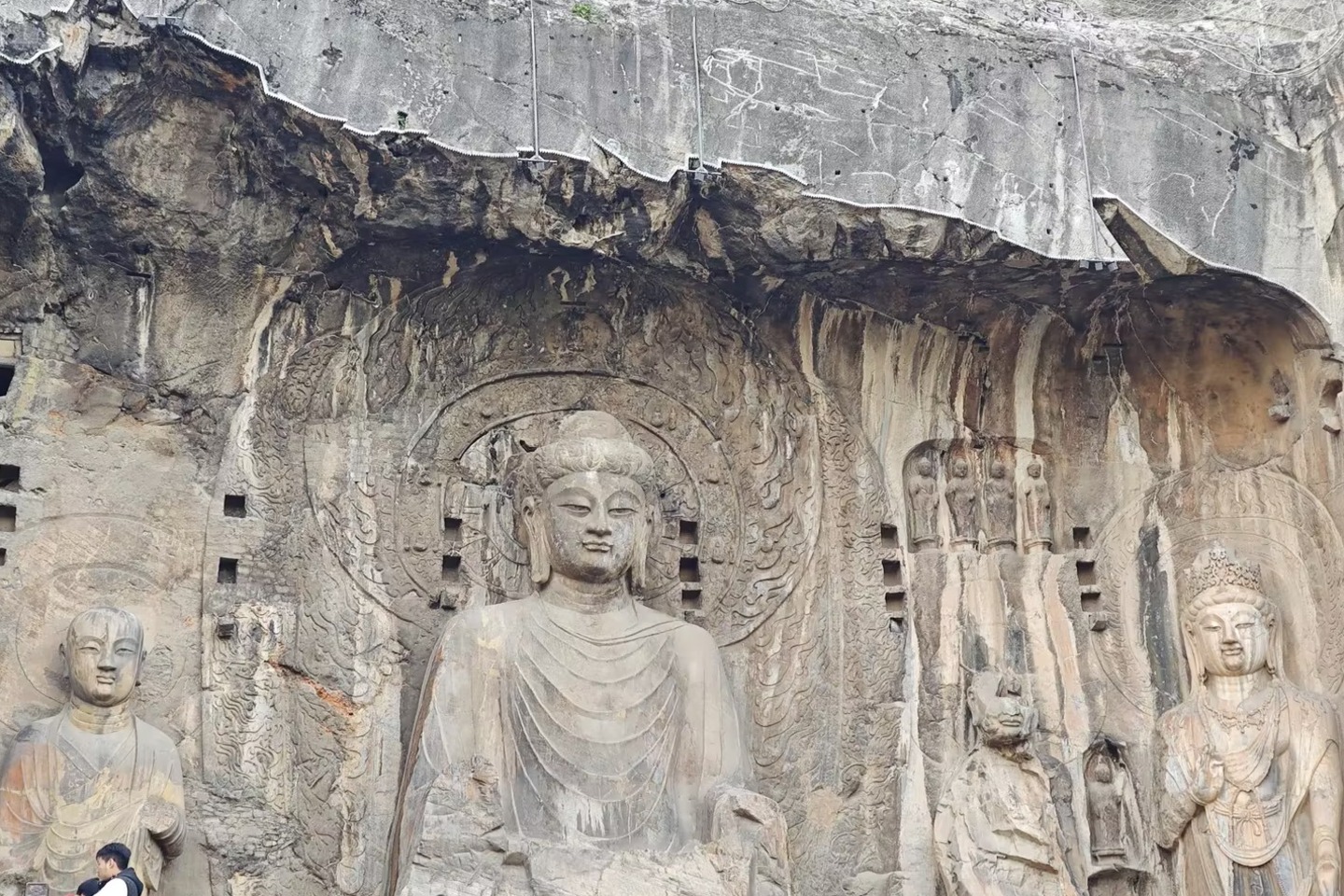
Longmen grottoes in Luoyang
The Longmen Grottoes are one of the treasure houses of stone carving art in China. They are a world cultural heritage, a national key cultural relic protection unit, and a national AAAAA tourist attraction. They are located on Longmen Mountain and Fragrant Mountain on both sides of the Yi River in the southern suburbs of Luoyang City. Longmen Grottoes, Dunhuang Mogao Grottoes and Yungang Grottoes are also known as the three major grottoes in China.
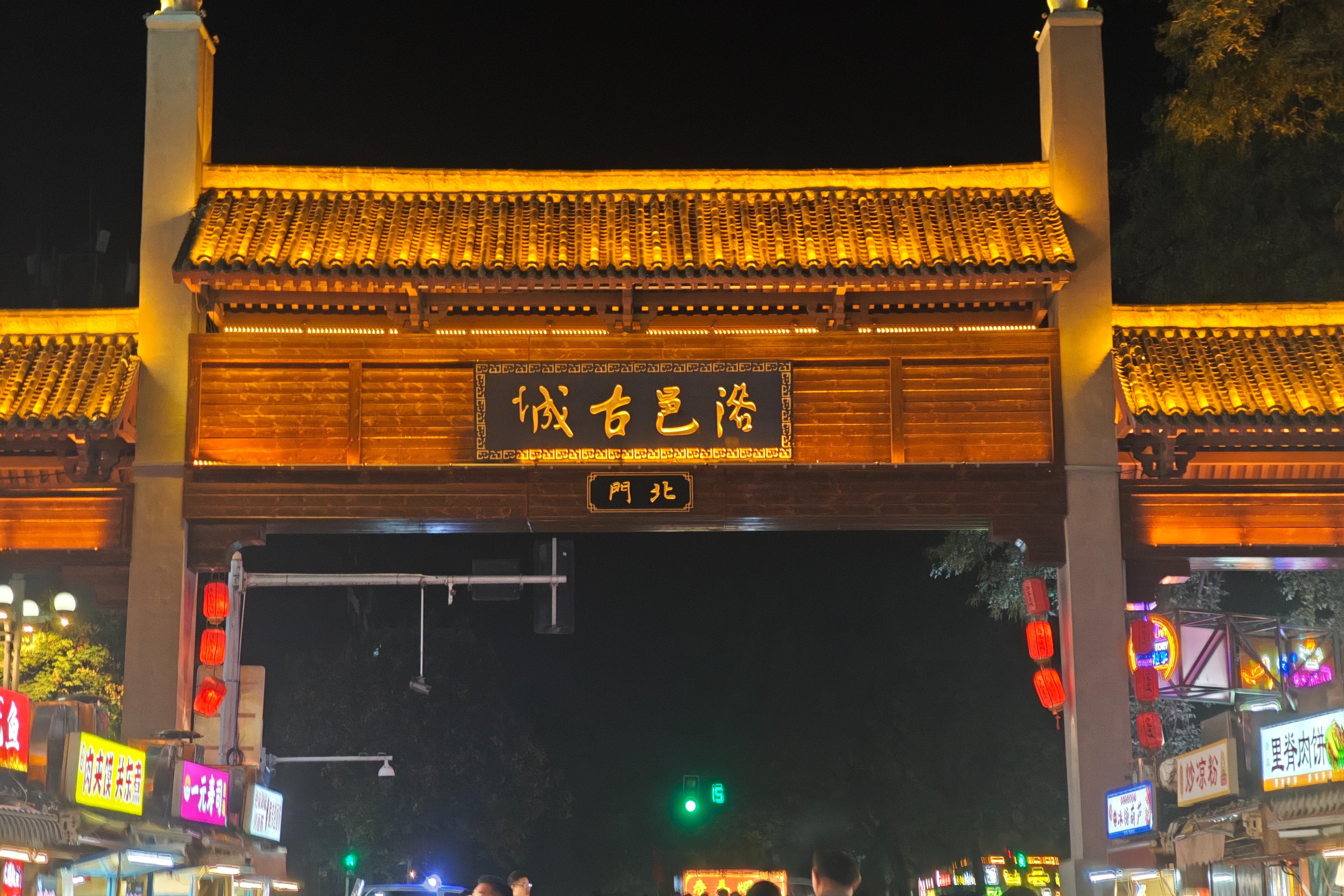
Luoyi Ancient City
Luoyi Ancient City is located in the Laocheng District of Luoyang City. It has a long ancient charm and many historical relics. "Luoyi" is the old name of Luoyang in ancient times. After thirteen dynasties, too much Chinese culture has been accumulated here. Strolling in the ancient city of Luoyi, you will find the eaves stacked on top of each other, and the city walls, ancient courtyards, old trees, etc., every place is unforgettable. The pavilions, small bridges and flowing water add a touch of tranquility and beauty here. Ruins such as Wenfeng Pagoda, Confucian Temple, and Tuoling Palace reflect Luoyang's profound historical and cultural heritage.
1 Experiences

Luoyang Shuixi
Luoyang Water Feast began in the Tang Dynasty and has a history of more than 1000 years. It is one of the oldest famous banquets preserved in China so far. Luoyang water mat has two meanings: one is that all hot dishes have soup; the other is that after eating one hot dish Luoyang water mat, one is served again after removing it, it is constantly renewed like flowing water. On September 10, 2018,"China Cuisine" was officially released, and "Luoyang Water Tasting" was rated as "China Cuisine" Top Ten Famous Theme Banquets in Henan.

Day4
Luoyang-Dengfeng
Today, we will travel by coach to Dengfeng to visit the Shaolin Temple. As the birthplace of both Chan (Zen) Buddhism and Chinese Kung Fu, it is revered as the “Ancestral Court of Chan Buddhism” and the “Holy Land of Kung Fu.” The temple has earned worldwide fame for the Shaolin martial arts meticulously developed and refined by generations of Shaolin monk warriors. It is often said that “All Kung Fu under heaven originates from Shaolin, and Shaolin Kung Fu reigns supreme.” The site is a UNESCO World Heritage Site, a Major Historical and Cultural Site Protected at the National Level, and a National 5A-level Tourist Attraction.
While at the Shaolin Temple, we will not only watch martial monks demonstrate their mastery of the “Eighteen Arms of Wushu” and Shaolin Kung Fu, but also have the opportunity to learn Shaolin boxing under their guidance.
After the tour, we will proceed to the Songyang Academy, one of the Four Great Academies of ancient China and a prestigious institution of higher learning in imperial times. Many renowned poets and philosophers in Chinese history studied here. In the evening, we will stay overnight in downtown Dengfeng.
2 Attractions
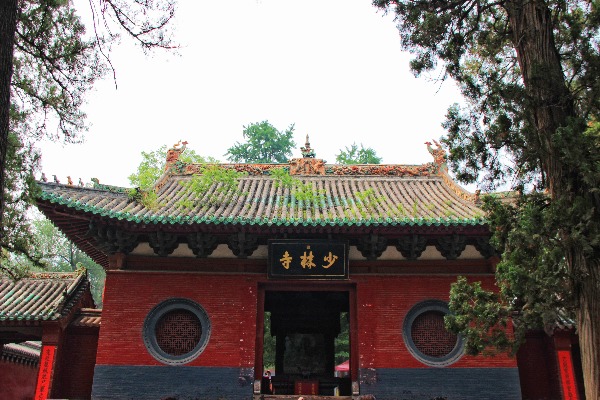
Shaolin Temple
Shaolin Temple is located at the foot of Wuru Peak in Songshan Mountain in Dengfeng City, Henan Province. Because it is located in the dense jungle of Shaoshi Mountain in the hinterland of Songshan Mountain, it is named "Shaolin Temple". Shaolin Temple is the ancestral home of Han Buddhism and is known as "the number one temple in the world." It is famous all over the world because of the Shaolin Kungfu that has been intensively researched, created and continuously developed by successive Shaolin martial monks. There is a saying that "the world's kung fu comes from Shaolin, and Shaolin Kung fu is the best in the world." It is a national AAAAA tourist attraction in China, the seventh batch of national key cultural relics protection units, and a global low-carbon ecological scenic spot. The "Building Complex in the Sky and Earth" including the Shaolin Temple Permanent Residence, Tallinn and Chuzu Nunnery is a famous world cultural heritage.
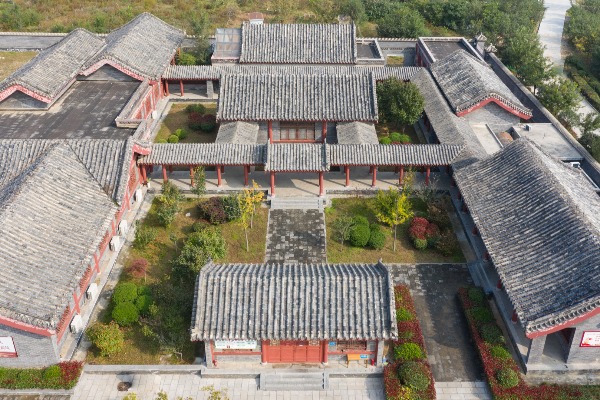
Songyang Academy
Songyang Academy is an ancient institution of higher learning and one of the four major academies in China. The Songyang Academy has a simple and elegant structure. The main buildings on the central axis have five entrances and complete corridors. Because of its unique architectural nature of Confucian education, Songyang Academy is known as a "specimen" for studying ancient academy architecture, educational system and Confucian culture in China.
1 Experiences
martial arts performance
In order to better promote Shaolin culture, tourists and friends can better understand the unique charm of Shaolin Kung Fu and appreciate the outstanding style of Shaolin disciples. Shaolin Scenic Area arranges performances at fixed times every day.
Day5
Dengfeng-Kaifeng
Today, we will travel by coach to Kaifeng. Upon arrival, our first stop will be Kaifeng Fu (Kaifeng Prefecture Office), the administrative and judicial headquarters of officials in the Northern Song Dynasty’s capital. Here, you can enjoy captivating performances such as the ceremonial opening of the yamen and welcome rituals, as well as reenactments of Judge Bao solving cases.
Next, we will visit the Iron Pagoda of Kaifeng, the tallest, oldest, and best-preserved glazed-brick pagoda in China, long renowned as “The Finest Pagoda Under Heaven.” We will then explore Qingming Shanghe Yuan (Qingming Riverside Landscape Garden), a large-scale Song-dynasty-themed cultural and historical park meticulously reconstructed at a 1:1 scale based on the imperial gardens depicted in the famous painting “Along the River During the Qingming Festival.” It is also the largest complex of Song-style ancient architecture in Central China.
Here, you will have the opportunity to try on traditional Chinese attire and experience Song-dynasty diancha (whisked tea preparation). Under the guidance and demonstration of a tea master, you will prepare your own bowl of whisked tea, immersing yourself in the refined elegance of Song-era culture.
3 Attractions
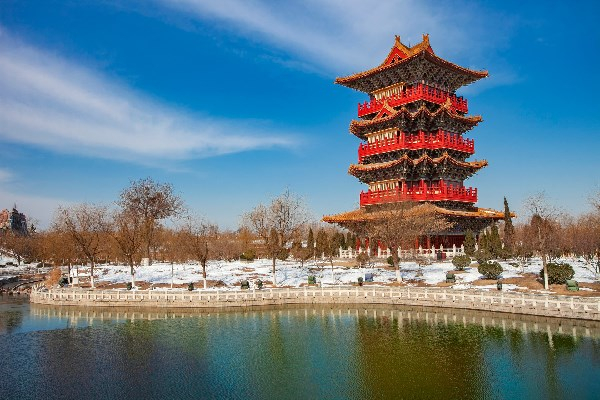
Qingming Riverside Landscape Garden
Qingming Shanghe Garden is a large-scale Song Dynasty cultural real-life theme park jointly built by the People's Government of Kaifeng City, Henan Province and Hainan Land Group Company. It is located on the west bank of Longting Lake in Kaifeng City. It is one of the country's first AAAAA-level tourist attractions and China's intangible cultural heritage performance bases. It is based on painter Zhang Zeduan's realistic painting "The Riverside Picture during the Qingming Festival", follows the construction standard of "Creation Style", takes Song Dynasty market culture, folk customs, royal gardens and ancient entertainment as the themes, and is characterized by tourists 'participation in the experience. theme park. The large-scale Song Dynasty folk customs amusement park that centrally reproduces the original scenery and scenery reproduces the thousand-year-old prosperity of Bianjing, the ancient capital. In 2009, Qingming Shanghe Garden became the first antique theme park in China based on paintings by the China World Records Association. It is a key historical and cultural tourist attraction of the National Yellow River Golden Tourism Line.
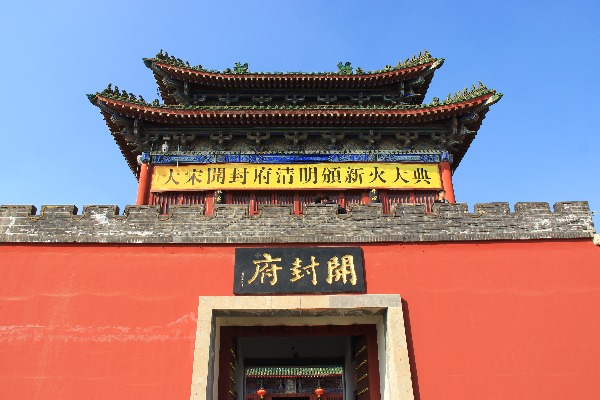
KaiFengFu
Kaifeng Prefecture is located on the north bank of Baogong East Lake. It is the government office of officials in Kyoto in the Northern Song Dynasty. It is known as the capital of the world and a national AAAA tourist attraction. Historical records show that there were 183 prefects in Kaifeng Prefecture in the Northern Song Dynasty, especially Bao Gong who was famous at home and abroad for serving as the seat of the Southern Government. The rebuilt Kaifeng Prefecture covers an area of more than 60 acres and has a building area of 13,600 square meters. It echoes the Baogong Temple located on Baogong West Lake and sets off with the rippling blue waves of the Sanchi Lake, forming a beautiful landscape of the East Mansion West Temple and pavilions and clear water.
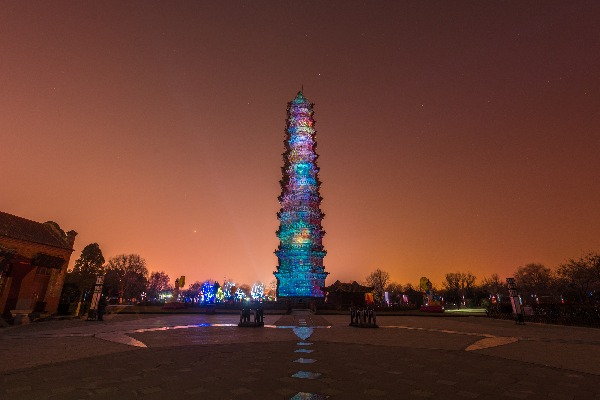
Kaifeng Iron Tower
The iron tower is located in the eastern half of the iron tower park on Beimen Street, Kaifeng City, Henan Province. It is an important cultural relic and a main attraction in the park. It was built in 1049 AD (the first year of Huangyou in the Northern Song Dynasty). It was one of the first batch of national key cultural relics announced by China in 1961 and is known as the "No. 1 Tower in the World." The iron tower is 55.88 meters high and has an octagonal 13 floors. Because this place was once Kaibao Temple, also known as the "Kaibao Temple Pagoda", and because it is covered with brown glazed bricks and mixed with iron, people have called it the "iron tower" since the Yuan Dynasty. In more than 900 years, it has experienced 37 earthquakes, 18 strong winds, and 15 floods, and it stands tall.
2 Experiences
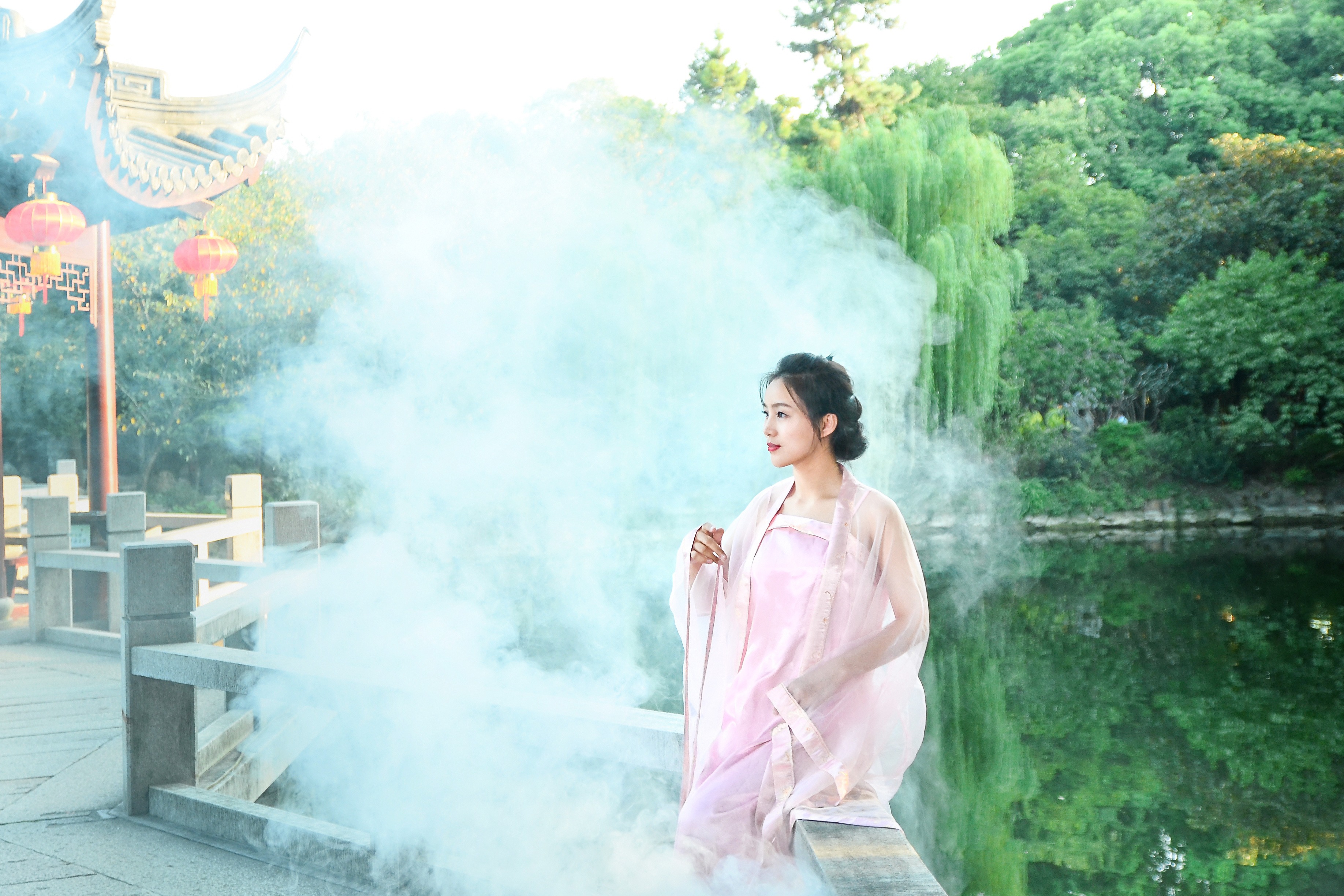
Wearing Song costumes at Shanghe Garden during the Qingming Festival in Kaifeng
Come and experience what it will be like when you are young, beautiful, elegant and handsome, wearing classic retro Song clothes.
Song Dynasty Tea Whisking Experience
Diancha, or tea whisking, in the Song Dynasty was an elegant way of consuming tea, deeply rooted in cultural heritage and artistic expression. Although it originated in the late Tang Dynasty, diancha reached its peak during the Song Dynasty, becoming a highly esteemed practice for hosting guests. The process involved several steps: roasting, breaking, grinding, and sifting the tea leaves, followed by preparing the tea paste, adding hot water, and vigorously whisking the mixture. Diancha was not merely about meticulously preparing tea; it embodied an art of living, reflecting the Song people’s pursuit of beauty and their love for life. In hands-on experiences of Song-style diancha, participants typically practice under the guidance of an instructor. For instance, at the “Song Dynasty Diancha Salon” held in Hongmei Subdistrict, residents tried their hand at whisking tea after watching demonstrations by science popularization instructors, personally experiencing the grace and composure inherent in the ritual. Such immersive experiences not only allow participants to appreciate the charm of Song-dynasty diancha but also help promote the inheritance and development of traditional Chinese culture.
Day6
Kaifeng-Zhengzhou
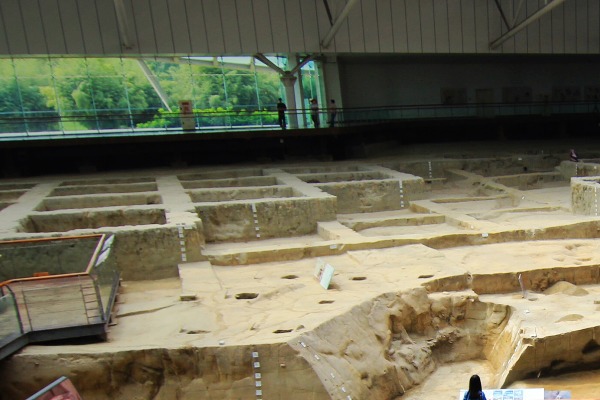
Today, we will first visit the Kaifeng Zhouqiao Archaeological Site, one of China’s Top Ten New Archaeological Discoveries in 2022. Due to warfare and frequent Yellow River floods, Kaifeng was buried multiple times throughout history by sediment carried by the river. Here, you can see remnants of bridges and buildings from different dynasties, experiencing the city’s resilience and rebirth amid the tides of history.
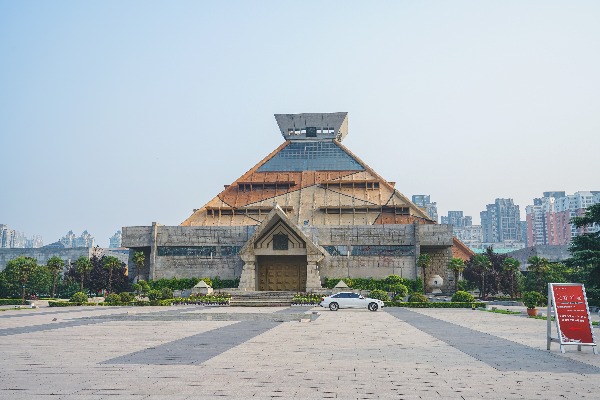
Next, we will visit the Henan Museum, a key national-level museum in China. As one of the earliest established museums in the country and among the first batch of nationally co-sponsored museums jointly supported by central and local governments, it houses approximately 140,000 artifacts, including prehistoric relics, Shang and Zhou dynasty bronzes, ceramics from various dynasties, and jade objects. These collections possess immense historical, cultural, and artistic value, with some regarded as “national treasures.”
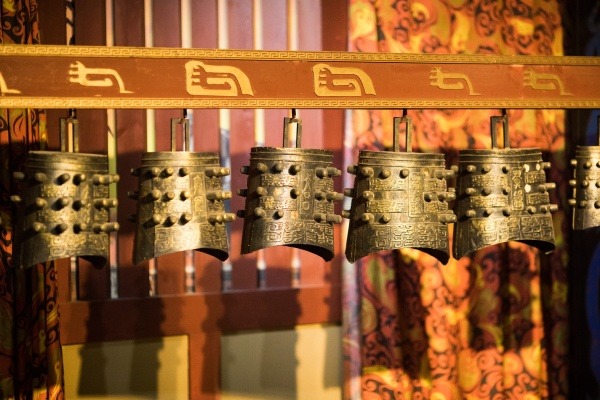
Afterward, enjoy the “Huaxia Ancient Music Performance” within the museum. The Huaxia Ancient Music Ensemble of the Henan Museum was founded in 2000. Based on musical artifacts unearthed in Henan, the ensemble has reconstructed ancient instruments, costumes, musical pieces, and performance settings from the Central Plains region. Through years of artistic practice, it has developed a distinctive brand of ancient music culture. During this performance, you will hear the “voices of history” resonating from several of the museum’s most prized treasures.
2 Attractions
Henan Museum
Henan Museum is located on Agricultural Road, Zhengzhou City, Henan Province. It is a national key museum. It is one of the earliest museums established in China and one of the first batch of national museums jointly built by the central and local governments. Exhibition of 140,000 cultural relics in its collection. Most of the cultural relics in the collection come from archaeological excavations in Shangqiu, Luoyang, Anyang, Kaifeng, Xichuan, Sanmenxia, Huixian, Xinzheng and other places in the early 20th century. Prehistoric cultural relics, Shang and Zhou bronzes, ceramics and jade ware of previous dynasties are the most distinctive. Among them, there are more than 5000 national first-class cultural relics and national second-class cultural relics, with extremely high historical, cultural and artistic value. Some of the collections are praised as important objects of the country.
Kaifeng Zhouqiao Archaeological Site
Located on the middle section of Zhongshan Road in Kaifeng, in front of the Leather Shoe Mall, the site marks a famous bridge that once stood at the intersection of the Imperial Street and the Bian River during the Northern Song Dynasty. The Zhouqiao Bridge site serves as compelling evidence of China’s great river civilization, illuminating the symbiotic relationship between the Yellow River and the ancient city of Kaifeng. As of September 2022, excavations had covered a total area of 4,400 square meters, uncovering 117 various cultural remains and features, and yielding more than 60,000 artifacts and specimens.
1 Experiences
Chinese Ancient Music Performance at Henan Museum
Restoring the performance of ancient musical instruments from various aspects such as musical instruments, costumes, music, etc., the sound of music and the sonorous ancient bells. People seem to appreciate the remoteness of ancient music, the charm of Han music, the prosperity of court music in the Tang Dynasty, the subtleties of Song Dynasty opera, and the coquettish of singing and dancing in the Ming and Qing Dynasties.
Day7
Zhengzhou
Today is your departure day. We will arrange for you to be dropped off at the airport in advance, based on your flight schedule. We hope this trip to Henan has left you with pleasant memories. You are warmly welcomed to visit Henan again and discover more of its rich culture and charm.

