• loading.......

7-Day, 6-Night Blue Ice Journey to Puma Yumco (Glacial Sacred Lake): Potala Palace, Yamdrok Lake, Puma Yumco, and Thangka Painting Experience

Destination Place

Lasa

Travel Days

7 days

Highlights

  • Touch the blue ice up close, and quietly listen to the sound of cracking ice.

  • The Pearl of the Roof of the World – Potala Palace

  • Tibetan indigenous hosts welcome guests to experience traditional Tibetan attire and savor the most authentic local ingredients.

Itinerary

Day1
Lasa
Today’s Itinerary: Travel from your respective cities to Lhasa

Upon landing safely at Lhasa Gonggar Airport, our staff will be waiting for you at the exit to present you with a white khata (traditional ceremonial scarf), welcoming you to Tibet with this unique Tibetan gesture of hospitality.

[Today’s vehicle service includes airport pickup only.]

[Friendly Reminders]
1. Avoid strenuous activities when first arriving at high altitude; walk slowly and take it easy.
2. Do not wash your hair or take a shower on the first day after arrival.
3. Keep your diet light and mild. You may drink sweet tea, butter tea, or sugary beverages such as Coca-Cola or Sprite to help alleviate mild symptoms of altitude sickness.
Day2
Lasa
Today’s Itinerary: Potala Palace – Jokhang Temple – Barkhor Street – Thangka Painting Experience

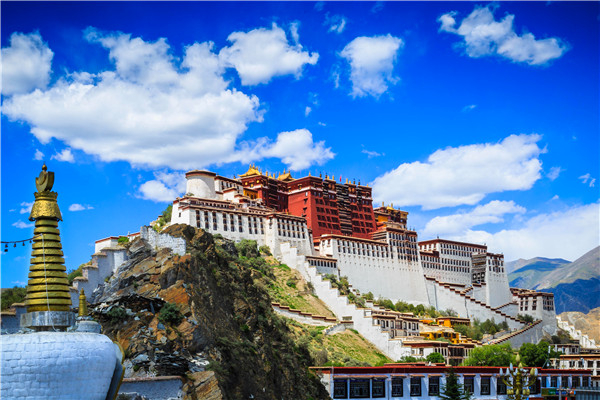
After breakfast, depart for the [Potala Palace]. (The visiting order will be determined by the scheduled time on your Potala Palace ticket reservation.) The Potala Palace is the highest-altitude palace complex in the world, integrating palatial, fortress, and monastic functions into one magnificent structure. It is also the largest and most complete ancient palace-fortress architectural complex in Tibet.

In the afternoon, visit [Jokhang Temple] to experience up close the spiritual allure of Buddhism through the life-sized golden statue of Shakyamuni Buddha. Afterwards, take a leisurely stroll along [Barkhor Street], where you can observe pilgrims prostrating themselves in devotion, feel the power of faith, and enjoy a moment of tranquility.

Following the sightseeing, head to the designated location to participate in a [Thangka Painting] activity. Thangka is a unique form of painting within Tibetan culture, using vibrant colors to depict the sacred Buddhist world. As an intangible cultural heritage, it represents a precious treasure of Chinese folk art.

Overnight stay in downtown Lhasa.
3 Attractions
  • Potala Palace

    Potala Palace

    The Potala Palace is the highest and majestic palace in the world. It is the most important symbol of Lhasa and even Xizang, and a holy place in the hearts of all pilgrims. It is mainly composed of the Red Palace and the White House. The highest Red Palace in the middle is an important place for holding religious ceremonies, and the surrounding White House is mainly the venue for the Dalai Lama's activities. The Potala Palace was photographed at three locations: Yaowangshan Observation Deck on the southwest side of the Potala Palace, the artificial lake bank of Zongjiao Lukang Park, and the Potala Palace Square.

  • Jokhang Temple

    Jokhang Temple

    The Jokhang Temple was built by the Tibetan king Songtsan Gampo. It has a history of more than 1300 years and holds a supreme position in Tibetan Buddhism. The Jokhang Temple is the most glorious Tibetan building in Xizang. It is also the earliest civil structure building in Xizang. It also created a Tibetan-style Pingchuan style temple city bureau style.

  • Eight Street

    Eight Street

    Barkhor Street, also known as Bajiao Street, is a famous transit road and commercial center in Lhasa. It relatively completely preserves the traditional appearance and living style of the ancient city. The original street of Bakor Street is just a single turning road around Jokhang Temple, which Tibetans call the "Holy Road". It has gradually expanded into a large old neighborhood around Jokhang Temple.

1 Experiences
  • Thangka production

    Thangka production

    Experience the drawing process of Stone Thangka firsthand, share the genre characteristics of Thangka, and enrich Thangka art.

Day3
Lasa-Shannan
Today’s Itinerary: Lhasa – Visit to a Local Tibetan Family – Zhannang Sand Dunes – Samye Monastery – Shannan (200 km, approximately 3 hours’ drive)

After breakfast, depart for Shannan. Your first stop is a visit to a local Tibetan family, where you’ll have the opportunity to wear traditional Tibetan attire, chat with Tibetan “Ajie” (elder sisters), and immerse yourself in the authentic warmth of daily life.

Next, you’ll pass through Tibet’s first national desert park—the Zhannang Sand Dunes. Marvel at the rolling, layered dunes and dramatic ravines. Here, you can enjoy the striking contrast of lake views against the desert landscape, observe graceful waterbirds, and experience the joy of getting close to the water.

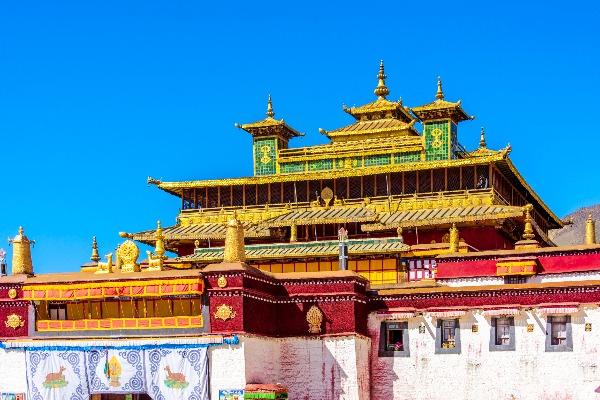
Upon arrival at Samye Monastery, one of the most sacred sites in Tibetan Buddhism, you’ll explore the first monastery in Tibetan Buddhist history to fully embody the “Three Jewels”—the Buddha, the Dharma, and the Sangha. Samye Monastery boasts a unique architectural style that blends Chinese and Tibetan elements, standing as a masterpiece of Tibetan architectural art.

After the tour, proceed to your hotel in Shannan for check-in and rest.
2 Attractions
  • Samye

    Samye

    Sangye Temple was built during the Tubo Dynasty in the 8th century AD. It was the first temple in Xizang where a toned monk became a monk. The buildings inside the temple are laid out according to the Buddhist cosmology. The central temple has three styles: Tibetan, Han and Indian. Therefore, Sangye Temple is also called Sanyang Temple. There are more than 50 monks in Sangye Temple.

  • Zhanang sand dune

    Zhanang sand dune

    It not only has the natural beauty of sand dunes, snowy mountains and Shuangxin lakes, but also has rich play facilities. It is definitely a good place to take photos and check in.

1 Experiences
  • Home visits by Tibetan indigenous people

    Home visits by Tibetan indigenous people

    In Tibetan homes, you can taste the most authentic local ingredients, yak milk produced by your own yaks, and hand-made butter tea. There is no taste of business. Although the language is blocked, it seems that the world has become a common world.

Day4
Shannan-Kangma
Today’s Itinerary: Shannan – Yamdrok Lake – Puma Yumco – Kangma (380 km, approximately 6 hours by car)

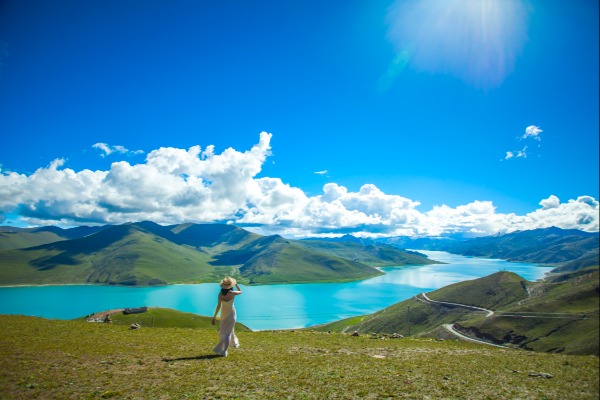
After breakfast, depart for Yamdrok Lake, one of Tibet’s three sacred lakes. Situated at an altitude of 4,441 meters, it is renowned as the “Turquoise Lake.” Its calm waters shimmer in a vivid azure, resembling a sapphire nestled on the Shannan Plateau.

Continue your journey to Puma Yumco, also known as the “Tears of the Maiden.” The frozen blue expanse of Puma Yumco rivals the beauty of Lake Baikal, while the small island in the lake, shaped like a giant tortoise, quietly watches over this “maiden.”

After the visit, check into your hotel in Kangma County for rest.
2 Attractions
  • Yambdrok

    Yambdrok

    YamdrokTso, referred to as Yanghu, meaning "Jasper Lake" in Tibetan, is one of the three sacred lakes in Xizang. It is like a coral branch, so it is also called the "Coral Lake above" in Tibetan. Langkazi County, located in the Shannan Prefecture of Xizang, is about 70 kilometers southwest of Lhasa. It is also known as the three sacred lakes in Xizang, along with Namco and Mapang Yongco. It is the largest inland lake at the northern foot of the Himalayas. The beauty of lakes and mountains makes it the best in southern Tibet. Yangzhuoyong Coo covers an area of 675 square kilometers and the lake surface is 4,441 meters above sea level. From Lhasa to Yanghu, you need to cross the 5030-meter Gambala Pass.

  • Phuma Yumtso

    Phuma Yumtso

    Pumoyong Co is a saltwater lake between the Himalayas. It is located south of Yangzhuoyong Co in Langkazi County, with an altitude of 5010 meters. The lake runs east-west, with an area of 290.0 square kilometers and a shoreline of 94.0 kilometers long. It is the highest lake in southern Tibet. There are three small rocky islands in the northeast of the lake. The lakeside is rich in water and grass, surrounded by endless grasslands and continuous snow-capped mountains. Being in them gives you the beauty of a paradise on earth.

Day5
Kangma-Rikaze
Today’s Itinerary: Kangmar → Duqing Cuo (Lake) → Qudeng Nima Glacier → Shigatse (450 km, approximately 7 hours’ drive)

After breakfast at the hotel, head to Duqing Cuo Lake. Besides its crystal-clear waters and gentle, enchanting charm, the lake is most captivating for the seven continuous snow-capped peaks that surround it. On clear days, the lake perfectly mirrors the snowy mountains, creating a breathtaking panorama as sunrise and sunset paint the sky and the tides ebb and flow, with the lake and peaks shimmering in harmony.

Next, visit the Qudeng Nima Glacier, officially known as Dorje Choden Nima, which translates to “Sunstone Vajra Stupa.” This lesser-known glacier is remarkably accessible. Its surface features strikingly vivid blue ice, allowing visitors to explore blue-ice caves, ice towers, and other glacial formations. National Geographic has hailed this place as “the end of the world.”

After the tour, check into your hotel in Shigatse for rest.
2 Attractions
  • Duoqingcuo

    Duoqingcuo

  • Qudenima Glacier

    Qudenima Glacier

    The glacier consists of three continuous blue glaciers, including the two main glacier routes of Yuhu and Tonghu. Due to its magnificent natural landscape and unique geological characteristics, the Qudenima Glacier is rated by National Geographic as the "Glacier at the End of the World".

Day6
Rikaze-Lasa
Today’s Itinerary: Shigatse – Tashilhunpo Monastery – Lhasa (280 km, approximately 4 hours by car)

After breakfast at the hotel, head to Tashilhunpo Monastery, one of the largest monasteries in Tibet and one of the six great Gelugpa monasteries. The complex faces south with its back to the north, and its Buddhist halls are arranged in sequence along the contours of the hillside, creating a harmonious and well-proportioned layout. While showcasing distinctive religious and ethnic features, the monastery’s architecture also highlights its profound cultural heritage.

After the visit, proceed to Lhasa for check-in and rest.
1 Attractions
  • Tashilhunpo

    Tashilhunpo

    Tashilhunpo Monastery, which means "Auspicious Sumeru Mountain" in Tibetan, is one of the six major monasteries of the Gelug Sect and a relatively large monastery of the Gelug Sect of Tibetan Buddhism in the Hou-Tibet area. It was founded in 1447 AD by Gendunzhuba, a disciple of Master Tsongkhapa, the founder of the Gelug Sect, and took 12 years to complete. Since the fourth Panchen Lama, Tashilhunpo Temple has become the residence of the Panchen Lama in Xinjiang for successive generations.

Day7
Lasa
Today’s itinerary: Airport transfer and conclusion of the tour.

After breakfast, you will be transferred to Lhasa Gonggar Airport according to your flight schedule for your return flight.