Arriving in Chengdu today, our service staff will pick you up and take you to the hotel to rest.
[A Tale of Two Cities of Sichuan and Chongqing·Chengdu + Chongqing 7th] Giant Panda Breeding Base + Sanxingdui Museum + Kuanzhai Alley + Beishan Stone Carvings + Dazu Stone Carvings + Ciqikou Ancient Town + Intangible Cultural Heritage Experience + Chengdu Special Hot Pot
Destination Place
Chengdu
Travel Days
7 days
Highlights
Explore Chengdu-Chongqing culture and visit panda bases and historic stone carvings.
Experience the prosperity of modern cities and visit Chunxi Road to Jiefangbei Commercial District.
Travel easily by high-speed rail and enjoy the specialties of the two places.
Itinerary
Day1
Chengdu
Day2
Chengdu
After breakfast, we will first take you to the Chengdu Giant Panda Breeding Research Base to observe these lovely national treasures up close. The famous "Harmony Flowers and Harmony Leaves" are here.
Then stroll to the wide and narrow alleys full of historical charm and experience the atmosphere of life in old Chengdu. After that, enjoy shopping on the bustling Chunxi Road and the fashionable Taikoo Li, and check in the famous landmark Chengdu IFS.
At dinner time, you may wish to go to Zuan Teahouse Hot Pot to taste authentic Sichuan cuisine. It combines Baba Banquet, Sichuan Opera Face Changing, Long-Mouth Pot Tea Art, Intangible Cultural Heritage Handcrafted Works and Sichuan snacks. Dining here is a good way to integrate into local life in Sichuan. way.
Then stroll to the wide and narrow alleys full of historical charm and experience the atmosphere of life in old Chengdu. After that, enjoy shopping on the bustling Chunxi Road and the fashionable Taikoo Li, and check in the famous landmark Chengdu IFS.
At dinner time, you may wish to go to Zuan Teahouse Hot Pot to taste authentic Sichuan cuisine. It combines Baba Banquet, Sichuan Opera Face Changing, Long-Mouth Pot Tea Art, Intangible Cultural Heritage Handcrafted Works and Sichuan snacks. Dining here is a good way to integrate into local life in Sichuan. way.
5 Attractions
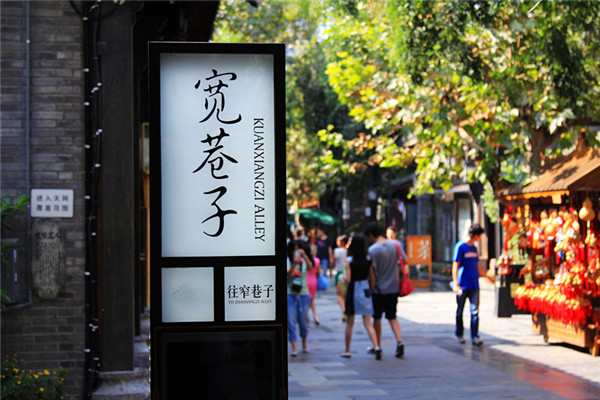
Kuanzhai Alley
Kuanzhai Alley in Chengdu is a historicalarea that dates back to the Qing Dynasty. ltconsists of wide and narrow lanes filledwith traditional Sich architecture andteahouses. The area offers a glimpse intoold Chengdu with its preserved buildings,local snacks, and vibrant street life.
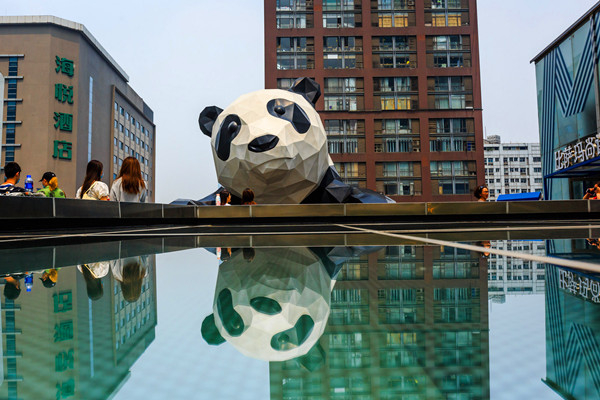
Chunxi Road
Chunxi Road is located in Chunxi Road Street, Jinjiang District, Chengdu City, covering the east of Beixin Street, south of Zongfu Road, west of Hongxing Road, north of East Street, Nanxin Street, Zhongxin Street and street-facing areas.
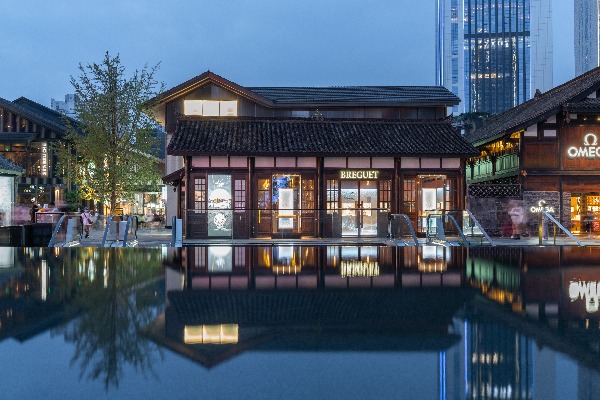
Taikoo Li
Chengdu Taigou Li pursues the most ancient and modern urban atmosphere. Ancient buildings with a certain history can be seen on every roadway. The feeling that Taigou Li gives people is the harmonious beauty of retro and fashion. The alleys and shops with a Chengdu flavor everywhere allow people to truly experience the flavor of Chengdu.
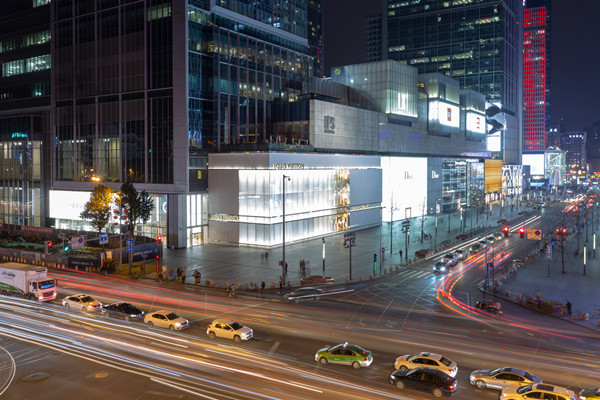
Chengdu IFS
Chengdu International Finance Square, referred to as Chengdu IFS, is located at the intersection of Hongxing Road and Dacisi Road in Jinjiang District, Chengdu City, Sichuan Province. It is an urban complex integrating shopping, culture and entertainment, office buildings, hotel-style apartments, and hotels.
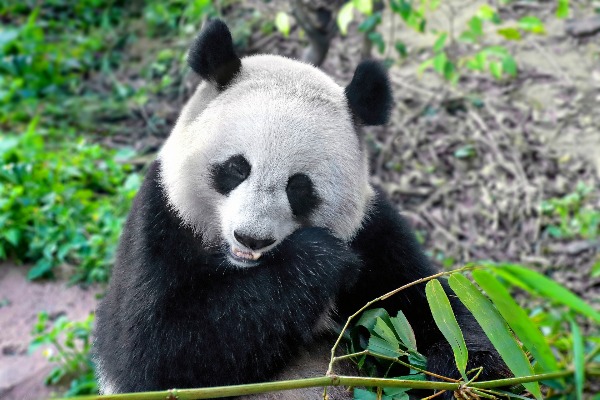
Chengdu giant panda breeding research base
The Chengdu Giant Panda Breeding Research Base is located on a shallow hill on the side of Futou Mountain in the northern suburbs of Chengdu City, Sichuan Province. It is a well-known research institution and tourist destination in China and even the world that integrates giant panda scientific research and breeding, public education and educational tourism. It is also a non-profit organization specializing in endangered wild animal research, breeding, protection education and educational tourism.
1 Experiences
Zouchuan Teahouse Hotpot
Zouchuan Teahouse Hot Pot is located in the Chunxi Road business district in Chengdu. It is a 5000-square-meter immersive cultural experience hot pot city. It integrates the Baba Banquet, Sichuan Opera Face Changing, Long-Mouth Pot Tea Art, Intangible Cultural Heritage Handcrafted Works and Sichuan snacks, and is known as the "Disney in the Hot Pot World". Customers can enjoy performing arts while eating hot pot, and can also taste authentic snacks such as baked egg cakes, sugar oil fruits and other one-stop at the "Chunxi Delicious Lane".
Day3
Chengdu
After breakfast today, we will go to Du Fu Cottage, which is the former residence of Du Fu, a great poet of the Tang Dynasty in China, when he lived in Chengdu. Du Fu lived here for nearly four years; then we will go to the Wuhou Temple, which is known as the Holy Land of the Three Kingdoms;
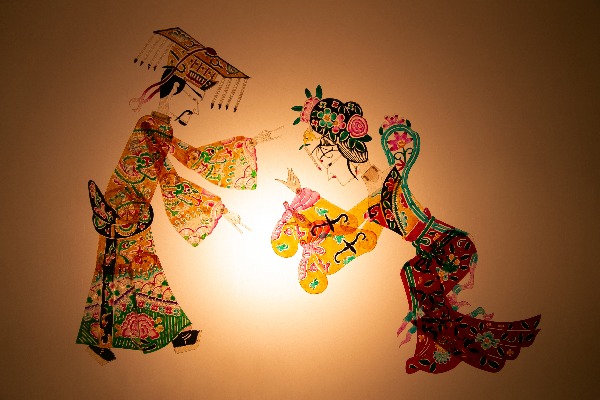
In the afternoon, go to the Chengdu Museum, which is famous for its three permanent exhibitions: "Hua Zhong Jinguan City" tells the past and present lives of Chengdu, and contains stone rhinoceros, Jing Xue lacquer people and other treasures of the museum;"Shadow Dance in Vientiane" is a treasure house of shadow puppet art in China;"Man and Nature" displays ecological diversity. This is the "spiritual home" to understand Chengdu.
Take a walk on Yulin Street in the evening. The neighborhood is home to taverns, graffiti walls, cafes and various delicacies. It is a popular landmark for experiencing Chengdu's slow life and market culture.
In the afternoon, go to the Chengdu Museum, which is famous for its three permanent exhibitions: "Hua Zhong Jinguan City" tells the past and present lives of Chengdu, and contains stone rhinoceros, Jing Xue lacquer people and other treasures of the museum;"Shadow Dance in Vientiane" is a treasure house of shadow puppet art in China;"Man and Nature" displays ecological diversity. This is the "spiritual home" to understand Chengdu.
Take a walk on Yulin Street in the evening. The neighborhood is home to taverns, graffiti walls, cafes and various delicacies. It is a popular landmark for experiencing Chengdu's slow life and market culture.
4 Attractions
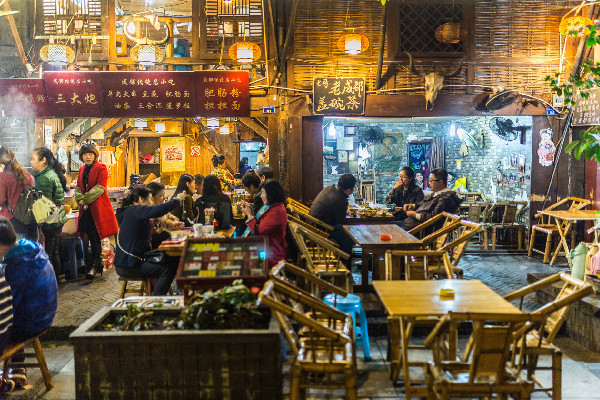
Yulin Street
Yulin is the old neighborhood where the secrets of Chengdu people's food are hidden. Walking through the tall buildings and walking into the deep alleys of Yulin, you can find a place to rest in the shade, or find an old shop to feast on your meal. Life seems to be in this quiet and bustling place. Find balance, here you can taste Wang Ma's hand-shredded roasted rabbit, Chen Ji's grandfather and mother-in-law's egg baked cake, etc.
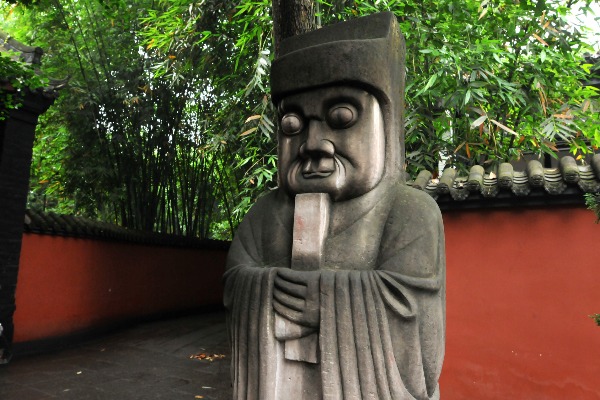
Temple of Marquis
Wuhou Temple began in 223 AD when Liu Bei's Hui Mausoleum was built. It is the only temple in China where monarch and minister worship together and the most famous memorial site for Zhuge Liang, Liu Bei and the heroes of the Shu and Han Dynasties. It is also the most influential museum of the Three Kingdoms relics in the country.
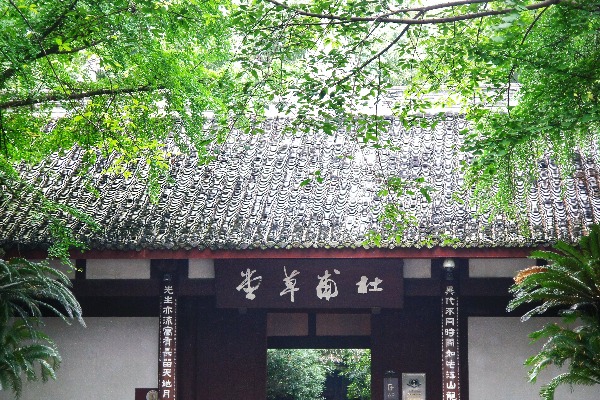
Du Fu Cottage
The former residence of Du Fu, a famous poet in the Tang Dynasty, when he lived in Chengdu. Du Fu lived here for nearly four years and wrote hundreds of poems. Therefore, it is regarded as a "holy place" in the history of China literature. The current Du Fu Cottage was restored many times in the Song, Yuan, Ming and Qing Dynasties.
Chengdu Museum
Chengdu Museum is located on the west side of Tianfu Square in Chengdu City, adjacent to Sichuan Province Library, Sichuan Art Museum, and Sichuan Science and Technology Museum. It covers an area of about 17 acres and has a total construction area of 65000 square meters. The internal space is divided into public activity areas, exhibition areas, cultural relics reservoir areas, office areas, etc. The main building is divided into the south building and the north building: the south building is mainly the administrative area on the ground, and the underground is the academic lecture hall (multi-purpose hall); the north building is mainly the exhibition area. The first floor is the hall, projection hall, and No. 1 pro-exhibition hall, and the underground floor is the No. 2 and No. 3 pro-exhibition halls. The second to third floors above ground are the ancient chapters of Chengdu's history and culture, the fourth floor is the modern world and folk customs, and the fifth floor is the China shadow puppet exhibition. The total exhibition area is 14000 square meters, and the exhibition line length is 1500 meters.
Day4
Chengdu-Guanghan-Chengdu
Morning: After breakfast, go to the Sanxingdui Museum, a museum with the theme of Sanxingdui culture. The museum displays rich cultural relics and historical relics, such as bronzes, gold ware, jade ware, pottery, etc. Here, you can learn rich historical and cultural knowledge and feel the charm of ancient civilization.
Afternoon: Visit the [Sanxingdui Bronze Art Workshop]. There are study courses in the park such as bronze pouring, ancient legal jade, intangible cultural heritage painting, and archaeological experience. Two of these experiences are arranged according to the actual situation on site;
Remarks: Research projects in Sanxingdui Bronze Art Workshop include bronze pouring, ancient legal jade, intangible cultural heritage painting, archaeological experience, etc. Individual visitors cannot make an appointment in advance. After arriving, they can participate based on the on-site class opening. If there is no project they want to participate, they can take a look in the scenic area and wait for your favorite projects to start.
Afternoon: Visit the [Sanxingdui Bronze Art Workshop]. There are study courses in the park such as bronze pouring, ancient legal jade, intangible cultural heritage painting, and archaeological experience. Two of these experiences are arranged according to the actual situation on site;
Remarks: Research projects in Sanxingdui Bronze Art Workshop include bronze pouring, ancient legal jade, intangible cultural heritage painting, archaeological experience, etc. Individual visitors cannot make an appointment in advance. After arriving, they can participate based on the on-site class opening. If there is no project they want to participate, they can take a look in the scenic area and wait for your favorite projects to start.
2 Attractions
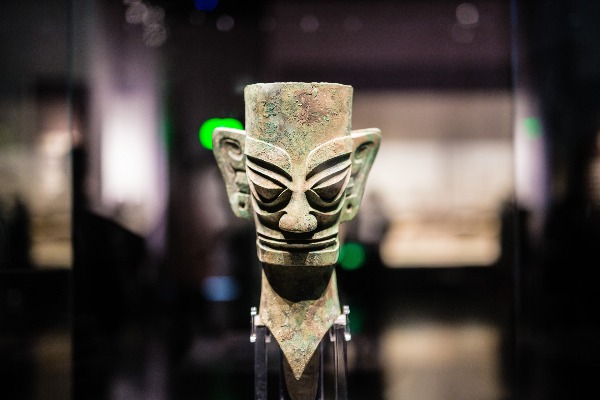
SANXINGDUI MUSEUM
The Sanxingdui Ruins are among the key cultural relics sites under national protection, the first batch of national archaeological site parks and the first batch of national demonstration areas for the protection and utilization of cultural relics. They have been included in the "Preparatory List of China's World Heritage Sites". The archaeological achievements of the Sanxingdui Ruins are renowned worldwide, demonstrating the civilized achievements over 4,000 years ago and providing more powerful archaeological evidence for the diversity and unity of Chinese civilization as well as the mutual influence between the ancient Shu civilization and the Central Plains civilization.
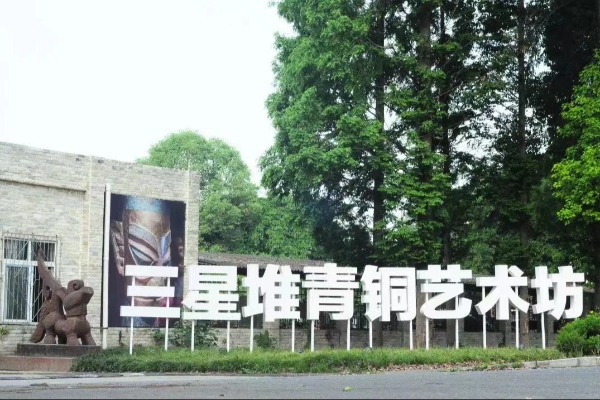
Sanxingdui Bronze Art Workshop
Sanxingdui Bronze Art Workshop is located in Sanxingdui Town, the core area of Sanxingdui Tourism Avenue in Guanghan City, about 6 kilometers away from Sanxingdui Museum. The base gathers comprehensive research and practice sites such as intangible cultural heritage bronze art workshops, bronze display areas, handicraft research school districts, simulated field archaeological excavation areas, and leisure catering areas. All areas cover a total area of about 50 acres. This is also an exploration base for ancient Shu civilization. Relying on the "Sanxingdui Bronze Art Workshop", the largest ancient bronze ware production factory in Sichuan, it is a popular science research and practice base integrating scientific research, production, sales and display.
Day5
Chengdu
After breakfast at the hotel, take the high-speed train to Chongqing. After arriving, the driver picked up the station and then set off for a tour of the newly promoted Internet celebrity attraction "Eling Second Factory". This is the check-in spot for Chongqing Internet celebrity landmarks, and also the filming location in the movie "Passing Through My World". It is also a cultural and creative holy place for artistic youth.
Go to the "Liziba Observation Deck" to take photos for about 30 minutes, watch the "Internet celebrity station" that has become famous at home and abroad because of its "monorail train passing through the building", and enjoy taking photos, taking videos, checking in and taking photos. Go to the "Jiefangbei Pedestrian Street", centered on the Memorial Monument of the Victory of the Anti-Japanese War. It is known as the Cross Golden Street,"China Famous Commercial Street","National Characteristic Cultural Square","First Street in the West" and other titles.
Finally, go to visit the "Hongya Cave" to visit the night scene. It condenses Chongqing's three thousand years of history and integrates Chongqing's unique Bayu folk culture, the architectural culture of mountain houses, and the dock culture. It has become a unique and beautiful city that has attracted worldwide attention.
Go to the "Liziba Observation Deck" to take photos for about 30 minutes, watch the "Internet celebrity station" that has become famous at home and abroad because of its "monorail train passing through the building", and enjoy taking photos, taking videos, checking in and taking photos. Go to the "Jiefangbei Pedestrian Street", centered on the Memorial Monument of the Victory of the Anti-Japanese War. It is known as the Cross Golden Street,"China Famous Commercial Street","National Characteristic Cultural Square","First Street in the West" and other titles.
Finally, go to visit the "Hongya Cave" to visit the night scene. It condenses Chongqing's three thousand years of history and integrates Chongqing's unique Bayu folk culture, the architectural culture of mountain houses, and the dock culture. It has become a unique and beautiful city that has attracted worldwide attention.
4 Attractions
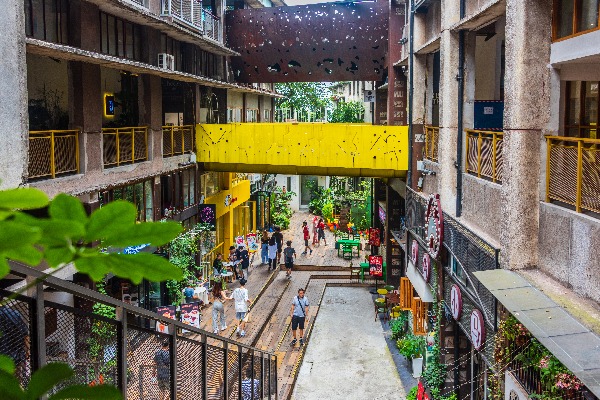
Eling Erchang Wenchuang Park
Factory No. 2 Cultural and Creative Park was formerly known as Chongqing No. 2 Printing Factory. It can be said that it was once a color printing giant in the southwest printing industry. The renovated old factory building retains the original style of the single-family old building and adds the artistic style of modern design. The blend of old and new has unique charm. The movie "Passing Through Your World" was filmed here.
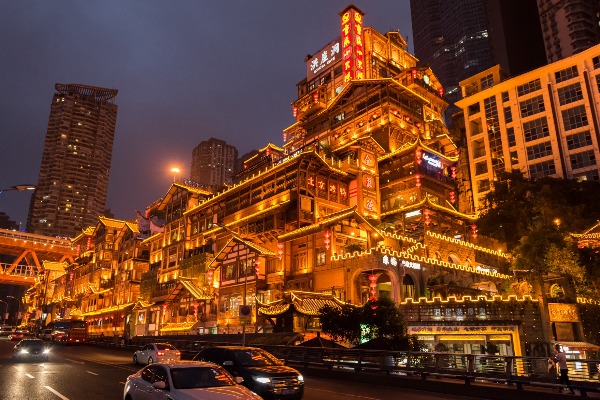
Hongyadong folk style area
The Hongyadong Traditional Folk Style Area is adjacent to Cangbai Road in Jiefangbei in the north and Jiangbin Road in the south. The project has a total length of about 1.2 miles along the river and a total commercial construction area of more than 50000 square meters. It is mainly composed of the "Hangjiao Building" style with the most traditional Bayu architectural characteristics. In line with the scattered heights of the buildings, it is based on the mountains. Through mountain building techniques such as layered platforms, hanging feet, staggered stacking, and facing cliffs, the five major business formats such as catering, entertainment, leisure, health care and characteristic cultural shopping are organically integrated together. It has formed a unique commercial pattern of "three-dimensional aerial pedestrian street". It is currently the large-scale commercial building with the most hierarchical texture and commercial landscape in Chongqing City.
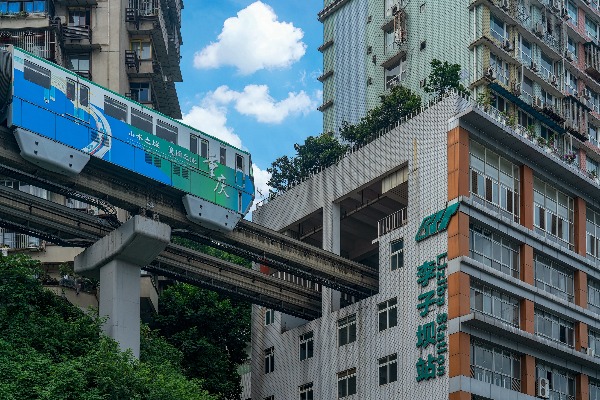
Net red subway
Chongqing is jokingly called a "Magic 8D City" by netizens because of its unique terrain, and many wonderful buildings often explode various social networking sites. Among them, a seemingly extremely ordinary but very rare "Internet celebrity attraction"-Liziba Light Rail Station "Crossing the Building Light Rail" is undoubtedly one of the best. Because it was very fantasy, it aroused the curiosity of many people and rushed to check in.
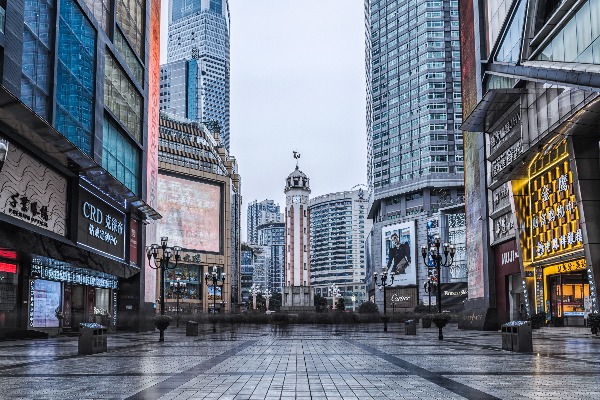
Monument for Liberation business center
The Liberation Monument, formerly known as the Victory Monument of the Anti-Japanese War, is the only national monument in China commemorating the victory of the Chinese nation in the Anti-Japanese War to commemorate Chongqing's great contribution to the country. Jiefang Monument is located in Yuzhong District, Chongqing City, at the intersection of Minquan Road, Minzu Road and Zourong Road. It is a historical witness of the victory of the Anti-Japanese War and the liberation of Chongqing. Most of the stele is white, and some places are flesh-colored. There are several big clocks on the top, facing in all directions. Every time the hour comes, a sound will ring. The tower is octagonal and has several antennas at the top.
Day6
Chongqing
After breakfast, go to Dazu and visit the [Baodingshan Stone Carvings]. Dazu Baoding Mountain Stone Carvings are a famous grotto art site in Baoding Town, Dazu District, Chongqing City, China. They are famous for their rich cultural connotations and superb artistic skills. It is huge in scale, rich in connotation, with overall layout, rich in pictures and texts, and has a distinctive secular color. There are nearly 10,000 stone carvings, beautiful in shape and full of Zen charm. They are the last swan song of China's grotto art. With its secularization and life-oriented characteristics, the Baodingshan stone carvings show the nationalization of Buddhist allusions and make Buddhist art closer to people's lives.
After returning to the city, visit the "Ciqikou Ancient Town", one of the famous cultural and historical streets. As an important land and water terminal along the Jialing River, it once flourished for a time when "thousands of people hand over each other in the day and tens of thousands of bright lights lit up after night", known as "Little Chongqing".
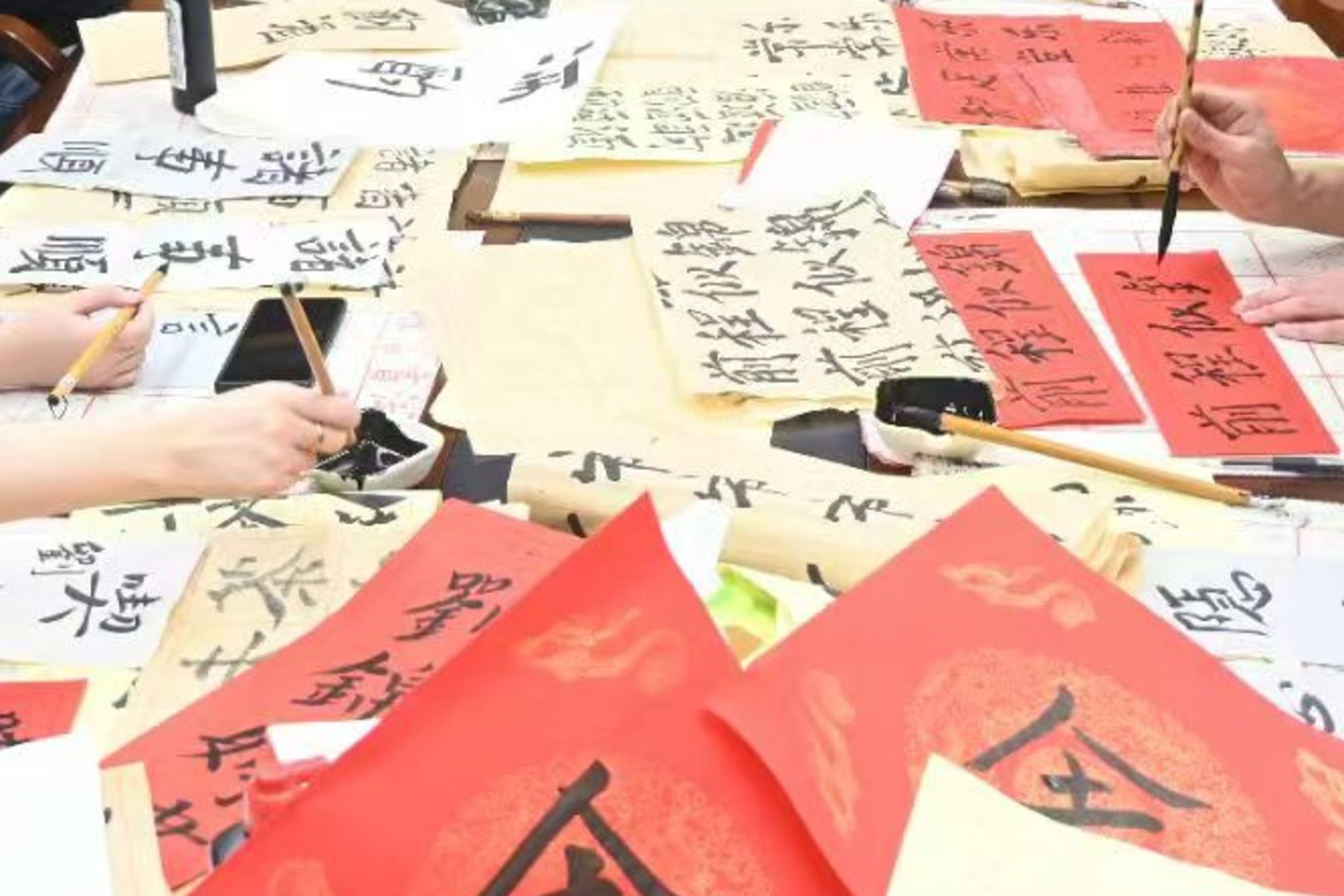
Then go to experience intangible cultural heritage handicrafts. Chongqing has many types of intangible cultural heritage skills, such as rubbings, silk enamel, dot emerald, mother-of-pearl, velvet flowers, paper-cutting, tie-dyeing, water painting, movable type printing, etc. You can choose a variety according to your preferences. experience.
Return to the hotel after the tour and check in and rest.
After returning to the city, visit the "Ciqikou Ancient Town", one of the famous cultural and historical streets. As an important land and water terminal along the Jialing River, it once flourished for a time when "thousands of people hand over each other in the day and tens of thousands of bright lights lit up after night", known as "Little Chongqing".
Then go to experience intangible cultural heritage handicrafts. Chongqing has many types of intangible cultural heritage skills, such as rubbings, silk enamel, dot emerald, mother-of-pearl, velvet flowers, paper-cutting, tie-dyeing, water painting, movable type printing, etc. You can choose a variety according to your preferences. experience.
Return to the hotel after the tour and check in and rest.
3 Attractions
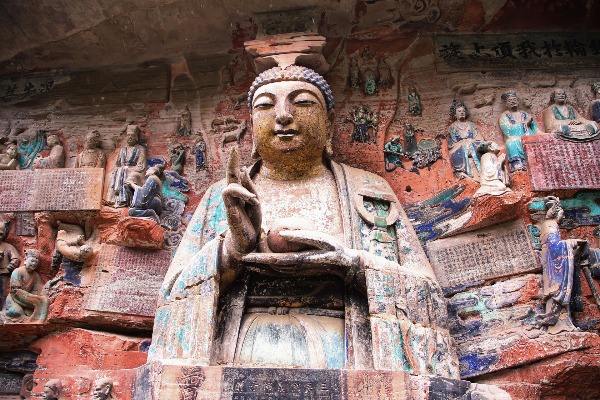
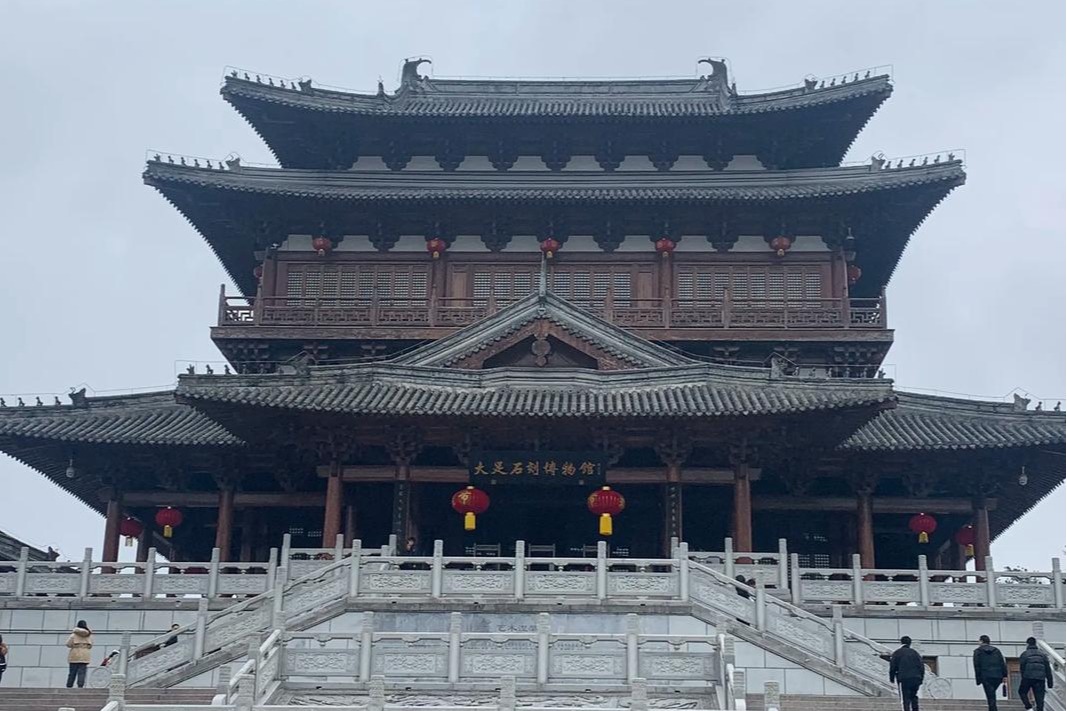
Dazu Rock Carvings
The Dazu Stone Carvings are located in Dazu District, Chongqing Municipality directly under the Central Government of China, 167 kilometers away from the Ninth District of Chongqing's main city. There are 74 more than 50,000 religious stone carvings. It is a religious cliff stone carving from the late Tang and early Song periods. It mainly focuses on Buddhist themes, with Confucian and Taoist statues displayed together, especially the cliff statues on Beishan and Baodingshan. The Beishan Cliff Statue is located in Beishan, 1.5 kilometers north of Dazu District, Chongqing City.
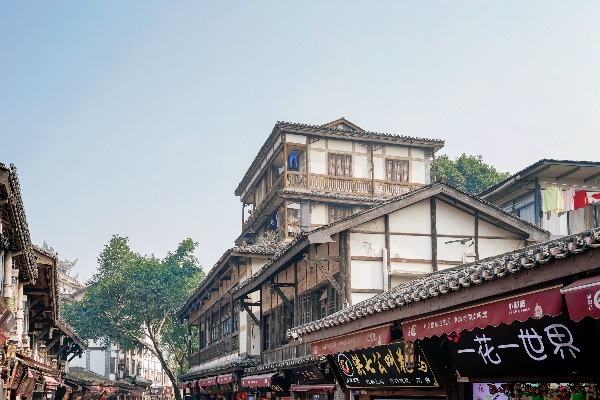
Ciqikou Ancient Town
Ciqikou Ancient Town is located on the bank of the Jialing River in Shapingba District, Chongqing City. It is adjacent to the Jialing River in the east, Shapingba in the south, Tongjia Bridge in the west, and Shijingpo in the north. Ciqikou Ancient Town has a unique landform of "one river, two streams, three mountains and four streets." Ma 'anshan sits among them, with Jinbi Mountain on the left and Fenghuang Mountain on the right. The three mountains are in the distance. Fenghuang and Qingshui double streams flow out in parallel, and the Jialing River flows from the north, forming a natural lane. Ciqikou Ancient Town was built in the Song Dynasty. In 1998, Ciqikou Ancient Town was identified by the State Council as a key protected traditional street in Chongqing City. In 2010, it was selected as a famous historical and cultural street in China. It is a key protected traditional street in Chongqing City that has evolved through thousands of years of changes.
1 Experiences
Day7
Chongqing
Free activities after breakfast. Our agency arranges for a driver to pick you up at the hotel, set off together, go to the airport/high-speed rail station, return to your warm home, and end your pleasant and beautiful trip.

